Sign Language for Elementary Music Lessons: Music Skills Practice
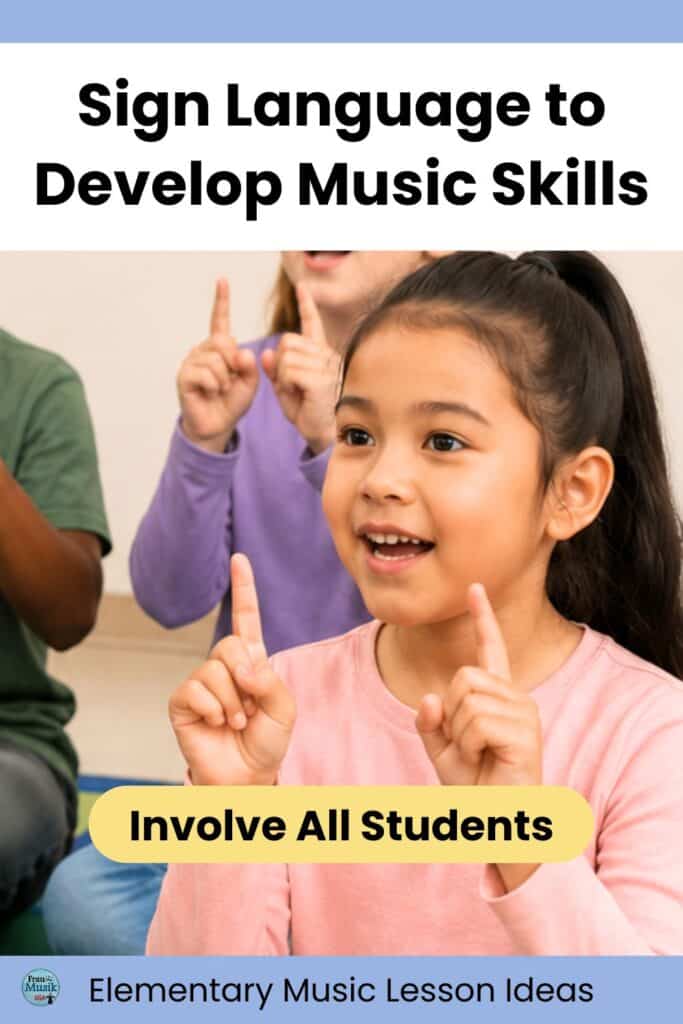
Use simple sign language in elementary music lessons to help all students practice music skills and respond at the same time.
Some of the links on this site are affiliate links. If you click on a link and make a purchase, I may earn a small commission at no cost to you.
Sign language can be a simple, practical tool to help students develop music skills and concepts in elementary music lessons.
These quick signs give students another way to show what they know as they practice music skills.
And here’s the best part: ALL students can respond to ALL questions at the same time.
You don’t need to be fluent in sign language to begin. Start with a few signs, use them consistently, and teach students to sign their responses in your elemetnary music classes.
ASL and SEE: What Teachers Should Know.
A quick note about sign language: ASL and SEE are not the same. ASL, or American Sign Language, is a complete language with its own grammar and structure. SEE, or Signing Exact English, follows English word order more closely.
Many (but not all) individual signs are the same in ASL and SEE. My school uses SEE, so that is what I use with students.
Be sure to check with administrators or support staff in your school so you are consistent with the signs and language system your school uses.
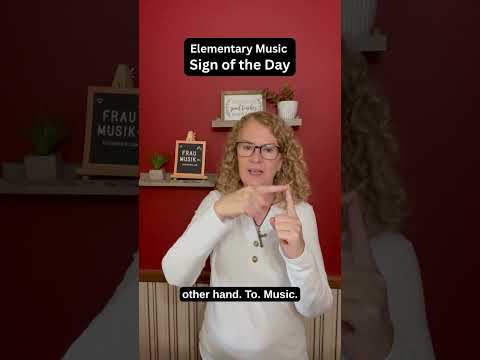
Sign: Welcome to Music
I like to begin with the signs for “welcome to music” because they create a warm, simple starting point for every class. This sets the stage and helps students feel like they belong.
These signs are easy to use as students enter the room or as you begin class. Students can sign welcome as they greet each other. Starting with familiar words helps students feel successful right away.
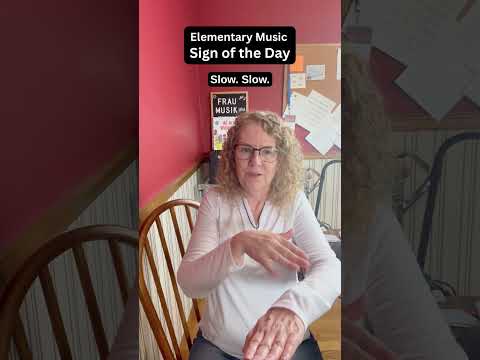
Comparatives: High/Low, Slow/Fast, Loud/Soft
The next signs I like to teach are comparatives: high/low, slow/fast, and loud/soft. These signs are perfect for simple ear training activities with early elementary music students because everyone can respond at the same time.
High and Low: Students can sign as they listen to vocal sounds, classroom instruments, or a picture book such as Up, Up, Down by Robert Munsch. As the words or sounds move higher and lower, students show what they hear with their hands.
Slow and Fast: These signs work well with listening examples that include changing tempos. Brahms’ Hungarian Dance No. 5 is a fun example because students can listen for tempo changes and show slow or fast as the music changes.
Loud and Soft: Students can identify animal sounds, classroom instrument sounds, or short musical examples. Instead of calling on one student at a time, the whole class can sign the answer together.


Signs: Same/Different and Up, Down, Same
The signs for same, different, up, and down are especially helpful for more advanced ear training activities. Students can use these signs to compare short rhythm patterns, melodic patterns, or classroom instrument examples.
Same and Different: Play or sing two short patterns and have students sign whether the patterns are an exact match or if they are different.
Melodic Direction: Students can listen for pitches that move up, move down, or stay the same. These signs make it easy to see who is understanding without stopping the flow of the lesson.
➤ These signs are perfect for quick obervational assessments.


Signs: 4 Voices and Movement Words
Talk, Whisper, Yell, Sing: These signs are a natural fit for teaching the four voices in early elementary music. Students can practice using each voice while also learning the matching signs.
Walk, Skip, Job, Run: Movement words work the same way. Students can listen, move, and sign the word that matches the action or the music. These signs are fun for movement activities and give young students a clear physical response.


Numbers 1-10 and Music Alphabet
Numbers 1–10: These signs connect naturally to music literacy practice. Students can use number signs to show how many beats they hear, identify meter, count repetitions, identify which pattern they hear, or answer other quick questions without calling out.
Music Alphabet: These signs are helpful for practicing treble clef (or bass clef note) note names, chords, and identifing form patterns. These signs are quick to teach and easy to use during warm-ups, review, and short response activities.


Build Anticipation and Celebrate: Play and Clap
The signs for play and clap are simple, but they can add a lot to music class routines.
Play: Use the sign to introduce an instrument or an instrument activity. It builds anticipation and helps students transition appropriately to the next part of the lesson.
Clap: This sign works well as a quick celebration after a strong classroom performance or noticeable improvement.
These two signs help students connect music-making with listening, responding, and encouraging one another.


Simple Signs, Big Participation
Sign language can be a simple way to help students listen, respond, and show what they know during elementary music lessons. Start with just a few signs that fit naturally into the activities you already teach. As students become more comfortable, add more signs for music skills, listening, movement, and performance.
➡️ See More Elementary Music Classroom Management Ideas
Related Posts:
Meet the Author

Terri Lloyd is a former K–5 music educator with more than 30 years of experience teaching elementary music.
Her credentials include:
- Bachelor of Music
- Master of Science in Education with an elementary music focus
- Missouri State Teaching Certificate, Vocal and Instrumental Music, Grades K-12
- Kodály Certification Levels I–III
- Instructional Technology Certificate in Curriculum and Design
Through Frau Musik USA, Terri helps elementary music teachers build students’ music literacy and performance skills with practical lessons and activities grounded in real classroom experience.
She develops music curriculum resources, presents music education workshops, works as a church musician, and K–5 Sunday school teacher. Terri also performs with a local big band, pit orchestras, and at community events.