Musical Instrument Worksheets and Coloring Pages for Elementary Music
Elementary music instrument worksheets, coloring pages, and puzzles for teaching instrument families in the music classroom.
Some of the links on this site are affiliate links. If you click on a link and make a purchase, I may earn a small commission at no cost to you.
Teaching musical instruments is essential in the elementary music classroom, but keeping it fresh can be a challenge.
Students need repeated exposure to learn instrument names, families, and sounds. But not every lesson can performance-oriented. That’s where simple printables can help.
Worksheets, puzzles, and coloring pages give students more time to process, review, and reinforce what they’re learning. And they’re no-prep activities that even a non-music sub can teach.
In this post, you’ll find easy ways to use instrument printables in your classroom or at home, along with examples you can use right away.
- Easy ways to use instrument printables in your classroom or at home.
- Examples you can use right away.
Why Use Worksheets and Coloring Pages in Elementary Music
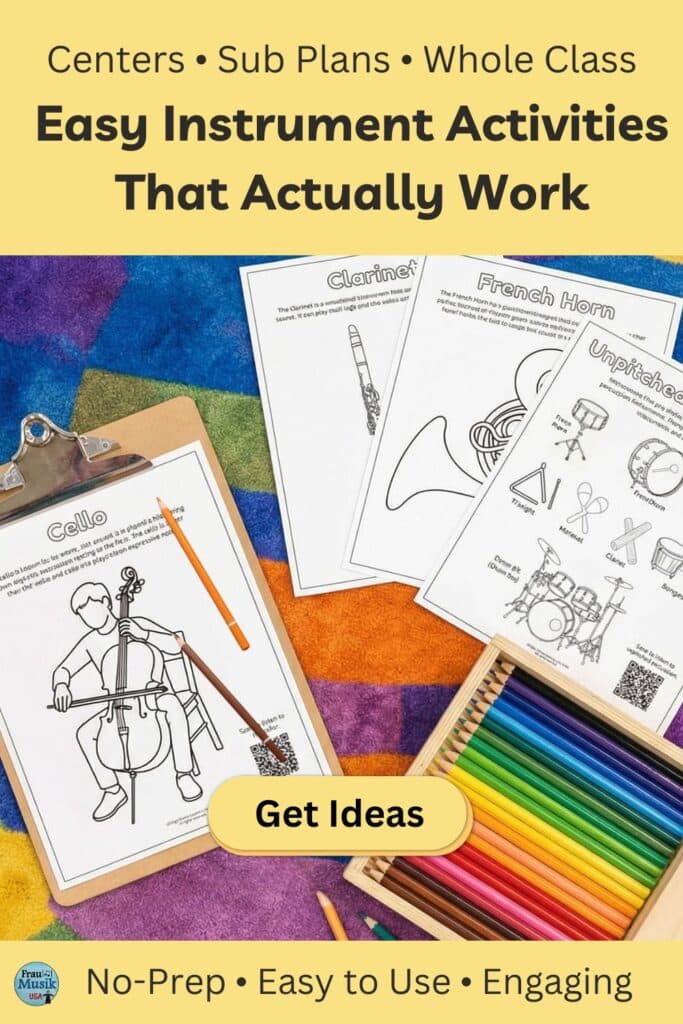
Worksheets and coloring pages aren’t just filler activities. They can support real learning when used with purpose.
They help students:
- Reinforce instrument names and families.
- Build vocabulary in a simple, low-pressure way.
- Connect what they have seen with what they have heard.
- Practice independently.
They help teachers:
- Provide quick review without extra prep.
- Create easy centers or early finisher activities.
- Leave clear, manageable sub plans.
- Reach a wide range of learners.
When used alongside focused intrumental listening lessons, these simple activities help learning stick over time.
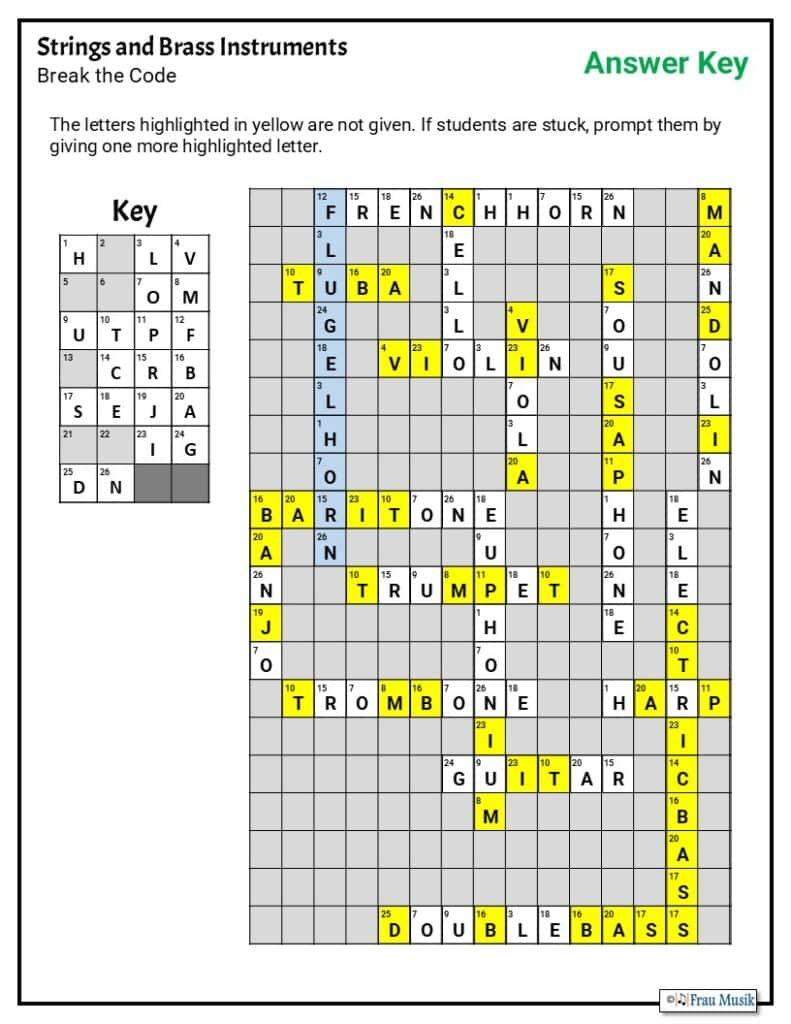
Break the Code Worksheets (Puzzles with Purpose)
If students enjoy solving puzzles, this is an easy way to build instrument vocabulary without it feeling like a worksheet.
How it works:
Students decifer the code to figure out instrument names. It turns simple review into a thinking activity.
How to use in class:
- Centers or small group work.
- Early finisher activities.
- Review after teaching instrument families.
- Simple, low-prep sub plans.
What students are practicing:
- Instrument names.
- Recognition of instrument families.
- Problem-solving skills.
If you’re looking for something students can work on independently while still reinforcing content, these work really well.
Instrument Coloring Pages with Audio (Listen + Color)
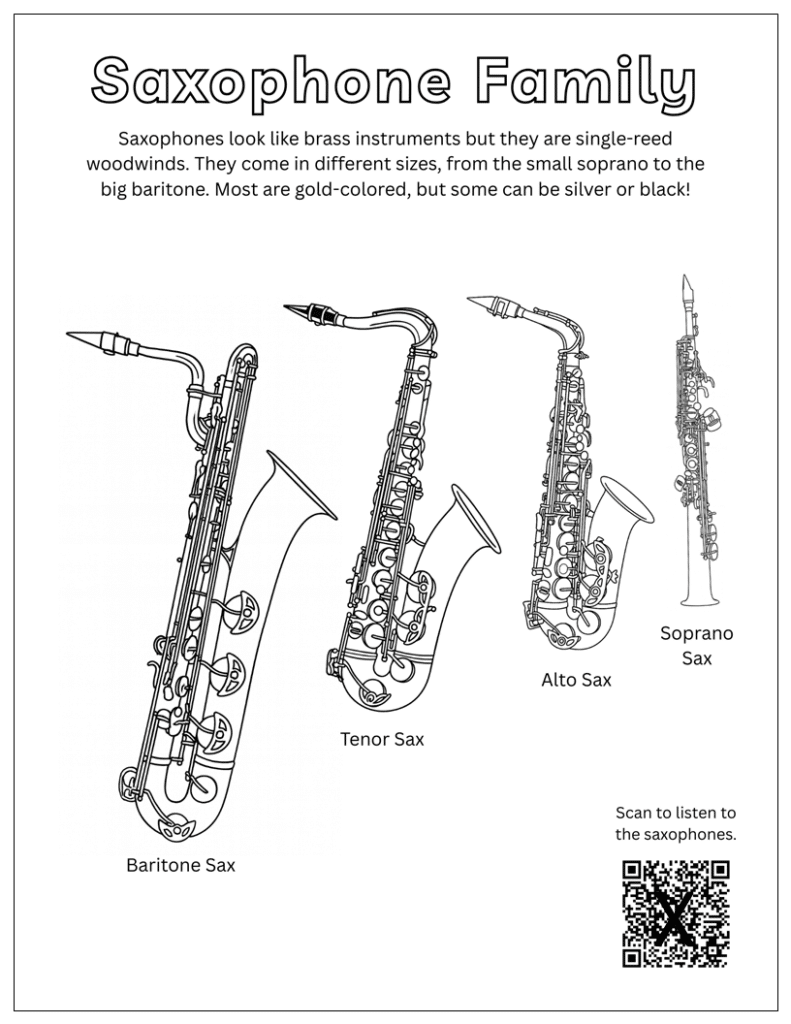
These go beyond typical coloring pages by adding a listening element.
Why this works:
Students connect what they hear to what they see. That extra step helps instrument recognition stick.
How to use in class or at home:
- Sub plans (especially for non-music subs).
- Listening centers.
- Calm activity to settle students.
- Take-home or homeschool practice.
What students are practicing:
- Identifying instrument sounds.
- Recognizing instrument families.
- Focused listening skills.
This is a simple way to bring listening into your lesson without needing instruments or guest performers.
Instrument Family Puzzles: Word Scramble, Word Search, Crossword
These are simple, low-prep activities that reinforce instrument vocabulary in a different way.
How to use in class:
- Quick review at the end of a lesson.
- Centers or rotation activities.
- Early finisher work.
- Easy sub plans.
What students are practicing:
- Instrument vocabulary and spelling.
- Recognition of instrument families.
- Making connections between instruments and their families.
- Strengthening concentration skills.

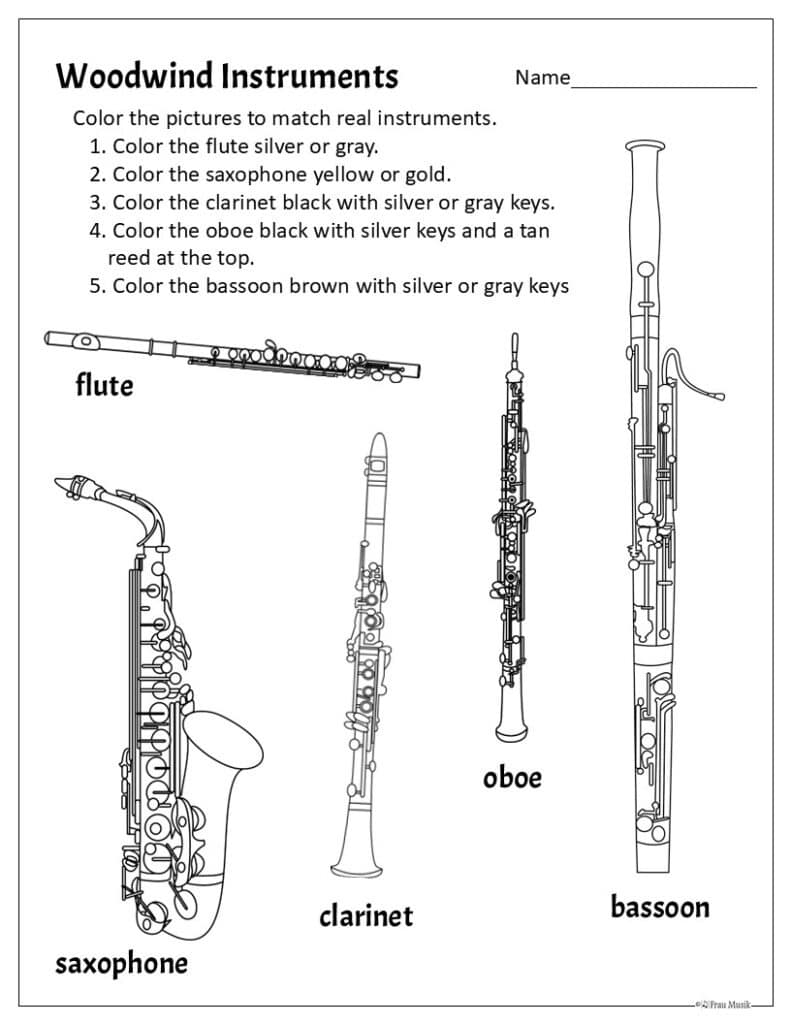
Guided Coloring Pages for Deeper Learning
These go beyond free coloring and help guide students’ thinking as they learn about instruments.
How to use in class:
- Introduce a new instrument family.
- Slow down and focus on key details.
- Support younger students or visual learners.
- Use as a follow-up after listening or discussion.
What students are practicing:
- Noticing details about each instrument. Identifying instrument families.
- Making visual connections to prior learning.
- Building understanding through guided prompts.
- Following directions.
Easy Lesson Ideas Using These Printables
These activities are easy to plug into your lesson plans without extra prep.
1. Instrument of the Day
- Introduce one instrument.
- Listen to a short example.
- Follow up with a worksheet or coloring page.
2. Listening + Coloring Center
- Students listen using QR audio.
- Color the matching instrument.
- Optional: discuss what they hear.
3. Choice Day Activities
- Station 1: Break the Code puzzle.
- Station 2: Coloring with audio.
- Station 3: Instrument videos and discussion.
4. Simple Sub Plans
- Leave a coloring page and puzzle.
- Add clear written instructions.
- Optional: Use short video links.
These ideas keep students focused while reinforcing what they’ve already learned.
For Parents and Homeschool Use
These printables also work well outside the classroom.
Why they’re helpful at home:
- Simple to use with little or no prep.
- Reinforce what students are learning at school.
- Combine music, reading, and problem-solving.
- Keep kids engaged without needing constant supervision.
Easy Ways to Use Them
- Work on one page at a time.
- Pair with a short listening example.
- Talk about instrument families together.
- Use as a quiet, independent activity.
They’re a fun option for building music knowledge in a simple, manageable way.
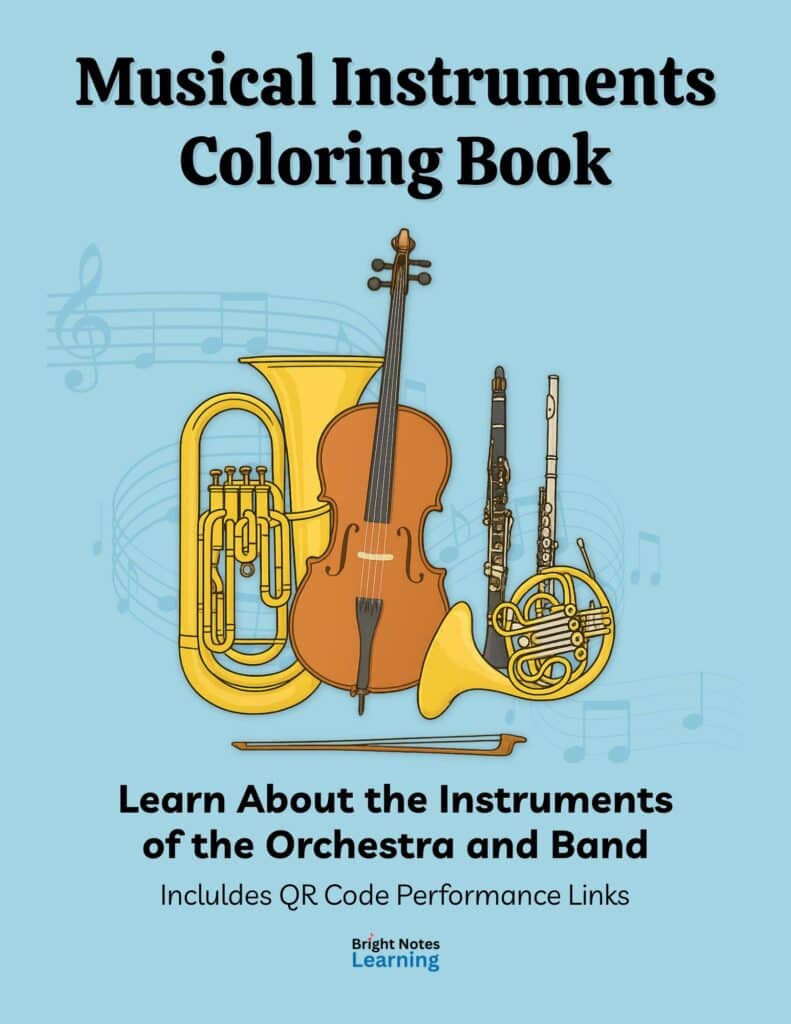
Musical Instrument Coloring Book Option
If you’re looking for even more options, where you don’t have to make copies, take a look at this “done for you” music coloring book.
- A coloring book format keeps everything in one place.
- Easy to use without no extra prep or materials.
If you’re looking for something flexible, a musical instrument coloring book with QR audio links combines quiet work with meaningful listening.
Where to Start
If you’re not sure where to begin, here are a few simple starting points:
- Try something quick:
Start with a free brass puzzle for an easy introduction. - Need sub plans:
Use coloring pages with audio for a calm, structured lesson. - Want a full set:
Choose a bundle to cover all instrument families throughout the year. - Working with younger students:
Begin with guided coloring pages to build understanding step by step.
You don’t need to do everything at once. Start with one activity and build from there as your students grow.
More Instrument Activities
Looking for more ways to teach instrument families in your elementary music classroom?
You can find more lesson ideas, games, and activities here:
Is your Sub Tub Ready to Go?
Take a peek at these no-prep activities any sub can deliver:
Meet the Author

Terri Lloyd is a former K–5 music educator with more than 30 years of experience teaching elementary music.
Her credentials include:
- Bachelor of Music
- Master of Science in Education with an elementary music focus
- Missouri State Teaching Certificate, Vocal and Instrumental Music, Grades K-12
- Kodály Certification Levels I–III
- Instructional Technology Certificate in Curriculum and Design
Through Frau Musik USA, Terri helps elementary music teachers build students’ music literacy and performance skills with practical lessons and activities grounded in real classroom experience.
She develops music curriculum resources, presents music education workshops, works as a church musician, and K–5 Sunday school teacher. Terri also performs with a local big band, pit orchestras, and at community events.