Elementary Music Lesson Ideas – February 2027
Fun ideas and activities include Black History Month and many more activities that will become your new favorite elementary music lessons.
Some of the links on this site are affiliate links. If you click on a link and make a purchase, I may earn a small commission at no cost to you.
February might be the shortest month, but it’s full of meaningful opportunities in the elementary music classroom. With Black History Month at its center, this is an ideal time to introduce students to songs, stories, and composers that deepen their understanding of music’s cultural and historical connections.
February also includes fun holidays and observances like Groundhog Day, Valentine’s Day, Presidents’ Day, and even Super Bowl Sunday. These events offer creative ways to connect music lessons to themes your students will recognize and enjoy. February is a dynamic and engaging month in the elementary music classroom.
What’s in this post? Click to open the Table of Contents
February Holidays and Observances
February is packed with themed days that can easily connect to music lessons. You don’t need to use all of them. Just pick a few that fit your students, your schedule, and your curriculum goals.
Use the list below for quick inspiration when planning lessons, centers, or short themed activities.
- February 1 – National Freedom Day
- February 2 – Ground Hog Day/National Ukulele Day
- February 4 – Thank a Mail Carrier Day
- February 5 – National Weatherman’s Day/National Wear Red Day
- February 6 – Chinese New Year
- February 7 – Send a Card to a Friend Day/Ramadan Begins
- February 8 – National Scout Day
- February 9 – National Pizza Day
- February 10 – Ash Wednesday
- February 11 – National Guitar Day
- February 12 – Abraham Lincoln’s Birthday
- February 14 – Valentine’s Day/Super Bowl Sunday
- February 15 – Presidents’ Day
- February 17 – Chinese New Year/Random Acts of Kindness Day/Ramadan Begins
- February 20 – Cherry Pie Day
- February 22 – Walking the Dog Day
- February 25 – National Chili Day
- February 27 – International Polar Bear Day
Monthly Observances
- American Heart Month
- Black History Month
- National Bird Feeding Month
- National Cherry Month
- National Children’s Dental Health Month
Weekly Observances
- February 14-20 – Random Acts of Kindness Week
Songs to Pair with Special Observances
These Grade K–2 songs pair naturally with several February observances and work well as quick additions to your lesson plans.
- Skinamarinky Dink (I Love You) – A natural fit for Valentine’s Day.
- Here Comes a Bluebird – Pairs nicely with National Bird Feeding Month.
- Brush Your Teeth – A fun way to support National Children’s Dental Health Month.
Get Up and Move
This SUPER FUN Rhythm Stick Line Dance by F. Willis Music is an easy way to add movement while reinforcing music skills.
- Practice simple rhythm patterns.
- Reinforce common solfege patterns (with hand signs).
- Short freestyle section for creative movement.
- Works especially well for upper elementary students.
A great option when students need to move while staying focused and on task.
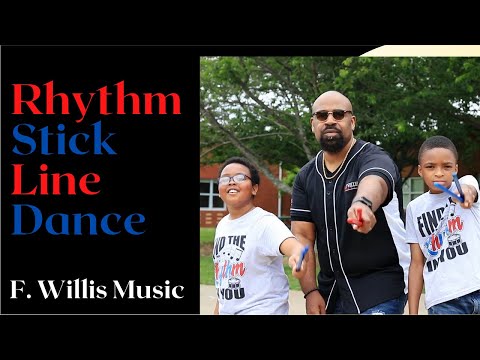
Follow the Drinking Gourd
Introducing the Underground Railroad to elementary students is challenging. The concept is complex and deeply rooted in our country’s historical struggle. The storybook Follow the Drinking Gourd provides an overview and a structured way to introduce this topic. The book and song help students grasp the hardships faced by those who sought freedom and the courageous people who created this network.
However, both the book and the song have sparked some debate. Dr. Prince Brown, Director of the Northern Kentucky University Institute for Freedom Studies, offers insights in this brief afterword, Follow the Drinking Gourd: A Cultural History, “Is This Song ‘Authentic’?”
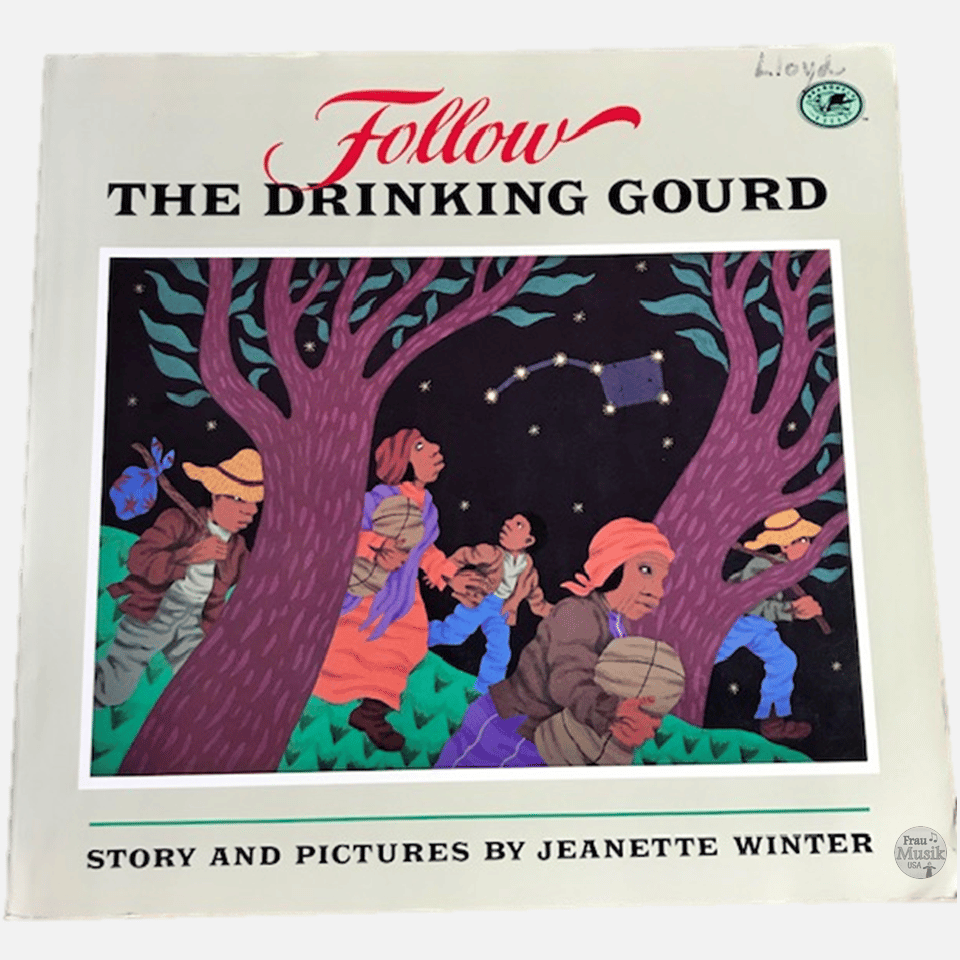
Storybook Videos
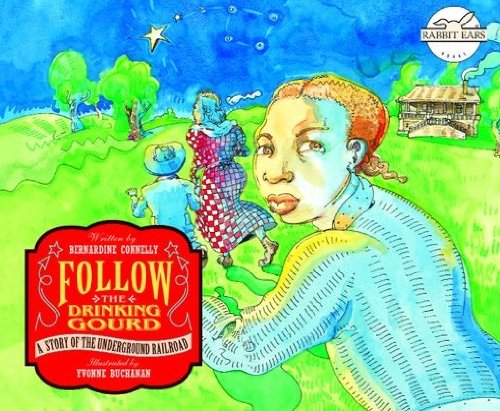
When teaching this song and its history, it’s important to consider the age and maturity of your students. Several versions of the storybook are available, along with two videos that bring the story to life.
- Rabbit Ears video is suitable for grades 1-5. It offers a straightforward and age-appropriate portrayal of the story.
- Reading Rainbow version takes a more intense approach, depicting enslaved individuals in chains and presenting a realistic view of their struggles.
*DO NOT show the Reading Rainbow version of this video in your classroom without previewing it and first consulting your administrator. (The realistic depictions are not suitable for young children.)
History of Civil Rights Leaders Paired with Spirituals
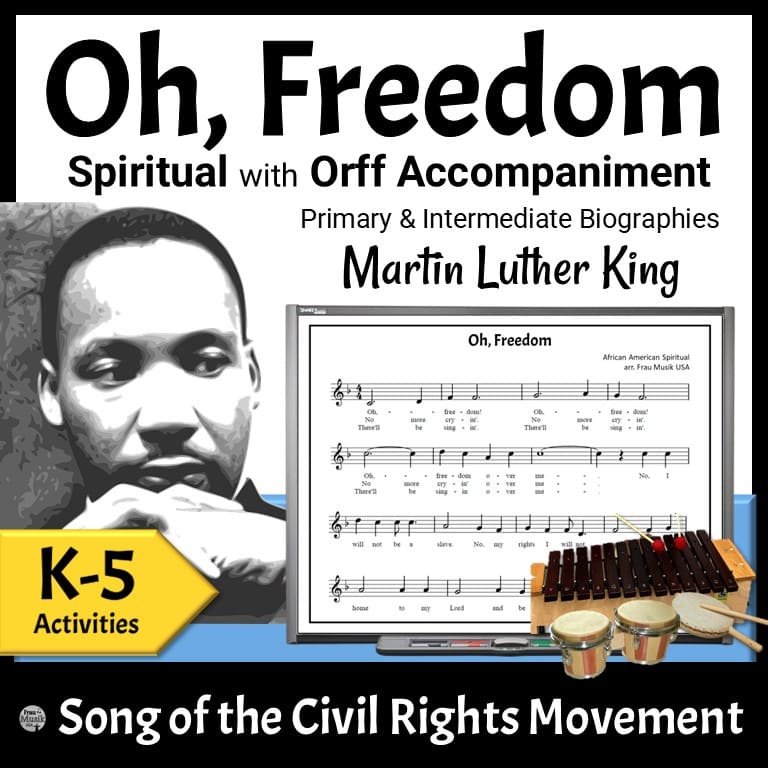
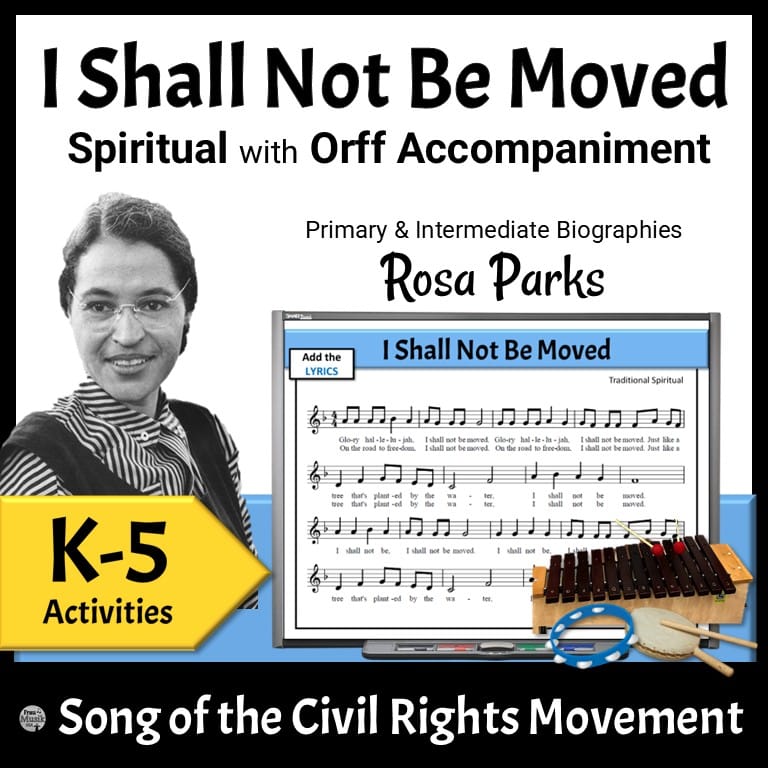
Spirituals are timeless and meaningful. They are an ideal addition to your elementary music lessons any time of year. Many of these songs pair naturally with the inspiring history of civil rights leaders. This helps your students connect music with important cultural and historical events.
Each song-based resource includes:
- Differentiated Orff arrangements
- 2 Leveled biographies of civil rights leaders
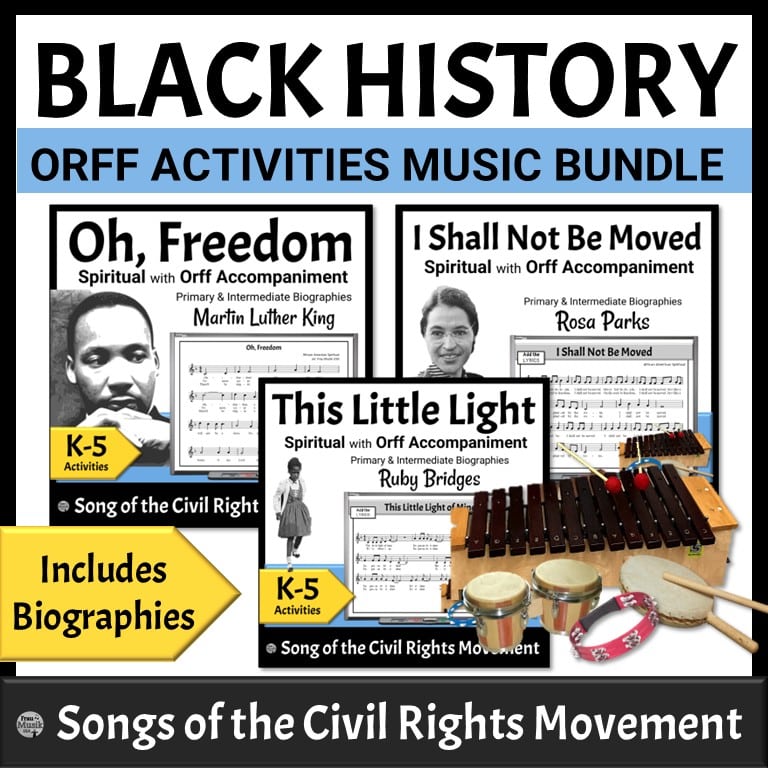
These thoughtfully designed lessons are perfect to help students learn musical skills while learning about the people who shaped the Civil Rights Movement.

Chinese New Year
This free song by Nancy Stewart, Gung Hay Fat Choy, is a lovely way to recognize Chinese New Year in the elementary music classroom. The title translates to “wishing you good fortune and happiness,” and the song is well suited for young singers.
Nancy generously provides both a full performance mp3 and an accompaniment track, making it easy to use with students. In my classroom, we’ve added sign language, which made the experience especially meaningful. One parent was so moved by this song that she requested it for several years in a row.
Important Tip: To avoid giggles around the word “fat,” I changed the lyric to “fa” (keeping the same short a vowel sound). Leaving off the final t helped students stay focused on the message of the song.
Valentine Song with Recorder and Orff Instruments
If sappy lyrics turn off some of your students (like they did mine) take a peek at Valentine, Valentine with Orff Activities. The added instrument parts keep students focused on music-making rather than lyrics, and it’s been a consistent K–5 favorite in many classrooms.
- Differentiated music literacy activities for each grade level.
- Orff accompaniments.
- Recorder notation.

Rhythm Reading with Valentine Flashcards
If you’re looking for ways to teach and practice rhythm reading, these interactive digital rhythm flashcards are an easy addition to February lessons.
- 8 leveled sets with 16 cards each (128 rhythm cards total).
- Iconic notation for younger students.
- Advanced patterns include sixteenth notes, syncopation, and dotted rhythms.
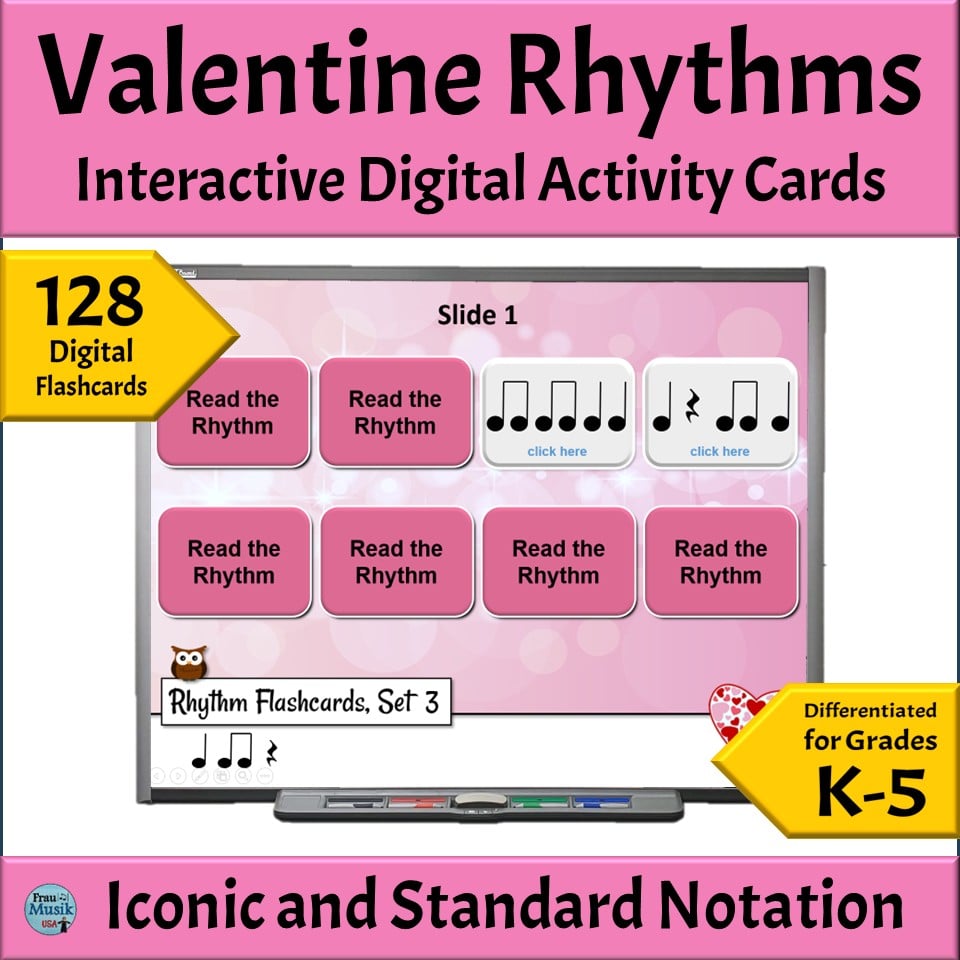
Need ideas for how to use rhythm flashcards in different ways? Take a peek at 10 Ways to Use Interactive Flashcards in the Elementary Music Classroom.
February Freebie for Your Early Elementary Kids
These Free Valentine Rhythm Clip Cards are a simple and effective option for early elementary students. Students listen to a rhythm pattern and identify what they hear, making this a strong activity for building listening and rhythm-reading skills.
Ways to Use Rhythm Clip Cards
- Practice
- Review
- Assessment
- Group activities
- Centers or stations

Simple prep: Print a class set on cardstock and laminate for repeated use.
See more clip cards ideas see this post – Fun Rhythm Activities for Elementary Music.
Looking for options for all grade levels? A complete set of Valentine Clip Cards is also available.
Brush Your Teeth Song – Dental Health Month
This simple song by Raffi is a great fit for early elementary students during National Children’s Dental Health Month. Add body percussion or sand blocks to mimic the sound of brushing. Enjoy!

Introduce Instruments and Foster Life-Long Musicians
Your role as an elementary music teacher has a lasting impact. Introducing students to instruments and musical opportunities can spark interests that continue well beyond the classroom.
I’ve had the joy of performing alongside former students in community groups and have seen others pursue music as a career. Early music experiences can have long-lasting impacts.
Take time to teach your students about the instrumental and vocal opportunities available in your school district and community. These early connections help students see themselves as musicians.
Prepare Your Students for Band and Orchestra
February is often when students begin registering for classes for the upcoming school year. For many upper elementary students, this may be the first time they can choose electives like band, orchestra, or choir.
Elementary music teachers play an important role in helping students understand these options. By introducing instruments and discussing program opportunities, you help students make informed choices and feel excited about what comes next.
This is also a great time to reinforce how classroom music skills connect to future ensemble experiences.


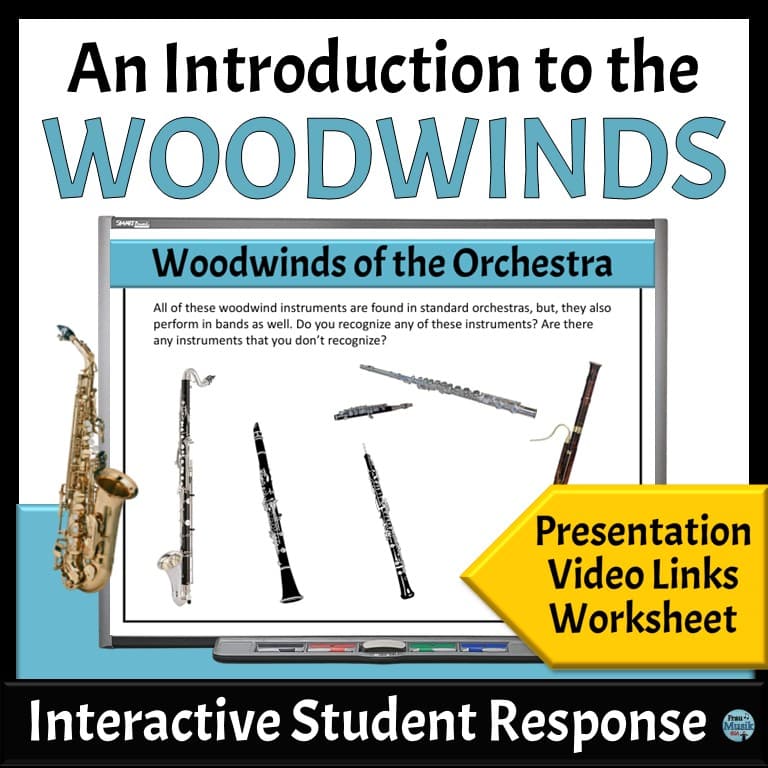

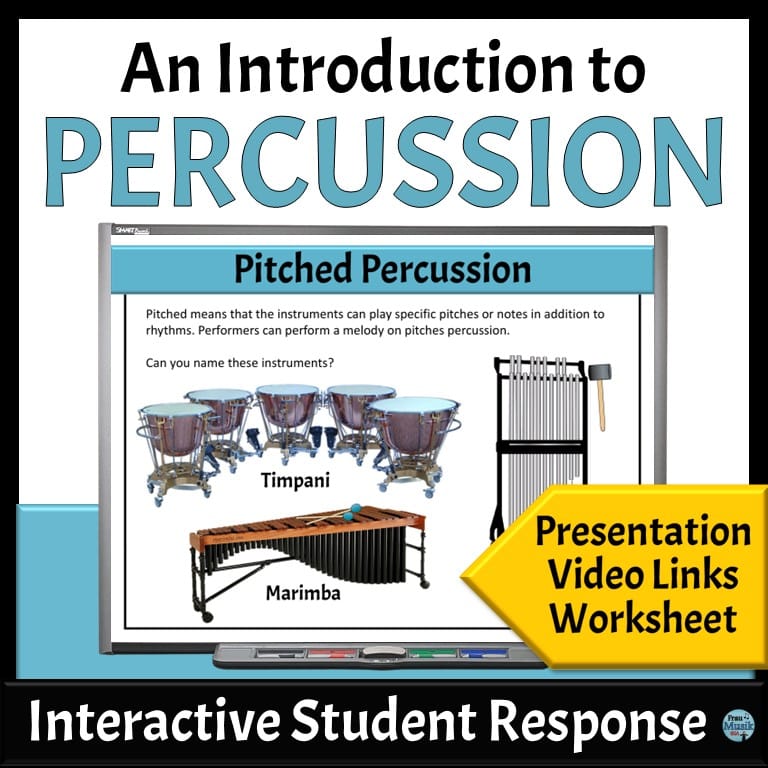
These complete, no-prep lessons include the major instruments in each family and optional student worksheets. Links to short, quality performances by professional musicians are embedded into each lesson.
*Note: PowerPoint lessons are compatible with Google Slides.
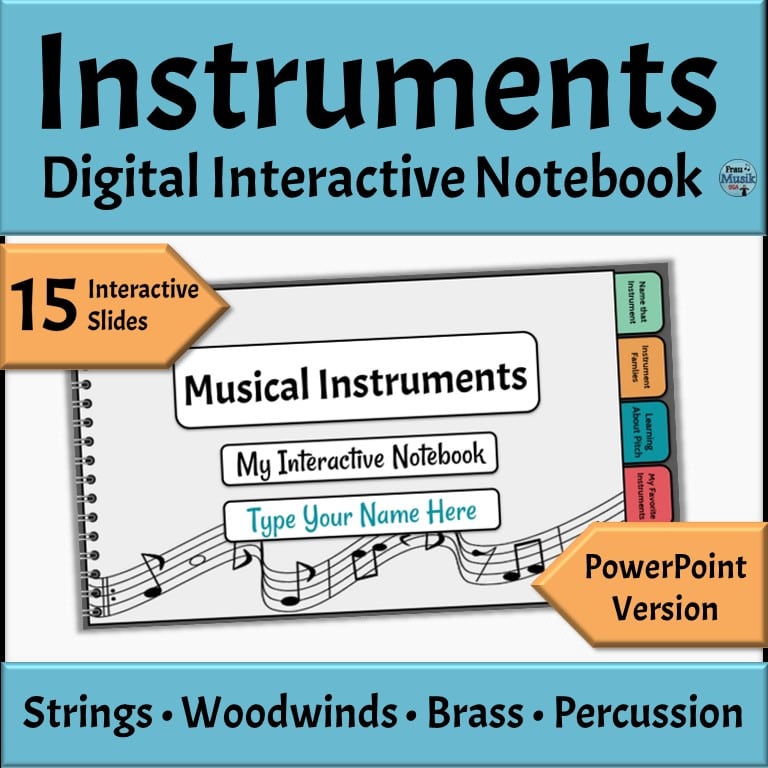
Digital Interactive Notebooks
Introducing instrument families helps students understand how instruments are grouped and prepares them for future ensemble experiences. These no-prep lessons make it easy to teach the major instrument families in a clear, structured way.
How to Use Interactive Notebooks
- Whole-class lessons (display on whiteboard).
- Centers or stations.
- Individual assignments.
- Homeschool activities.
These digital interactive notebooks are available in PowerPoint and Google Slides formats, making them easy to use no matter your teaching setup!

Treble Clef Worksheets – Sub Plans or Classroom
Need easy, no-prep activities to practice treble clef note names? These Treble Clef Notes Worksheets are a reliable choirce for February lesson plans or any time your students need extra practice.
Designed for student success, activities are scaffolded for easy differentiation. Lines and spaces are introduced separately, allowing students to master one skill at a time. Plus, the worksheets are organized by progressive difficulty, helping students master the basic staff notes before adding ledger lines.
Printable and Digital Activities for Multiple Grades
- 16 Printable sequential worksheets
- Answer keys
- Word spell activities
- Decode the story

Available as standard PRINTABLE worksheets or DIGITAL self-checking activities.


Valentine Composition Worksheets – 6 Levels
Looking for a Valentine-themed activity that still focuses on music skills? These Valentine music composition worksheets give students a chance to create their own music while practicing rhythm compositions.
Activities are easy to prep and work well for elementary music class lessons or music sub plans. Students stay focused and creative while reinforcing foundational music literacy skills in a fun, seasonal way.

Conclusion
February may be a short month, but it packed with many meaningful opportunities for the elementary music classroom. Choosing lessons that build music literacy while connecting to seasonal themes helps you make the most of limited class time.
February favorites like these allow students to build skills while staying engaged with holidays and observances. Thoughtful planning makes it possible to keep lessons focused, relevant, and enjoyable all month long.
Enjoy, friends!
For more practical ideas that strengthen music reading over time, visit:
Elementary Music Literacy.
5 FREE Music Literacy Boom Cards
Fill out the simple form below to claim your free Boom Cards.
More Lesson Planning Ideas
- Designing Black History Lessons for Elementary Music
- Black History Music Lessons that Teach History and Music Skills
- March is Music in Our Schools Month
Meet the Author

Terri Lloyd is a former K–5 music educator with more than 30 years of experience teaching elementary music.
Her credentials include:
- Bachelor of Music
- Master of Science in Education with an elementary music focus
- Missouri State Teaching Certificate, Vocal and Instrumental Music, Grades K-12
- Kodály Certification Levels I–III
- Instructional Technology Certificate in Curriculum and Design
Through Frau Musik USA, Terri helps elementary music teachers build students’ music literacy and performance skills with practical lessons and activities grounded in real classroom experience.
She develops music curriculum resources, presents music education workshops, works as a church musician, and K–5 Sunday school teacher. Terri also performs with a local big band, pit orchestras, and at community events.