Authentic Assessment in Elementary Music
Assessment in elementary music should be authentic, quick, valid, reliable, and FUN! Learn how to integrate assessment activities and build music skills.
Some of the links on this site are affiliate links. If you click on a link and make a purchase, I may earn a small commission at no cost to you.
Do you need quick, easy-to-administer ways to assess your elementary music students? Assessment in elementary music classes can take many forms.
Quality assessments should be. . . . .
- Authentic
- Reliable
- Valid
- Quick
- Easy to administer
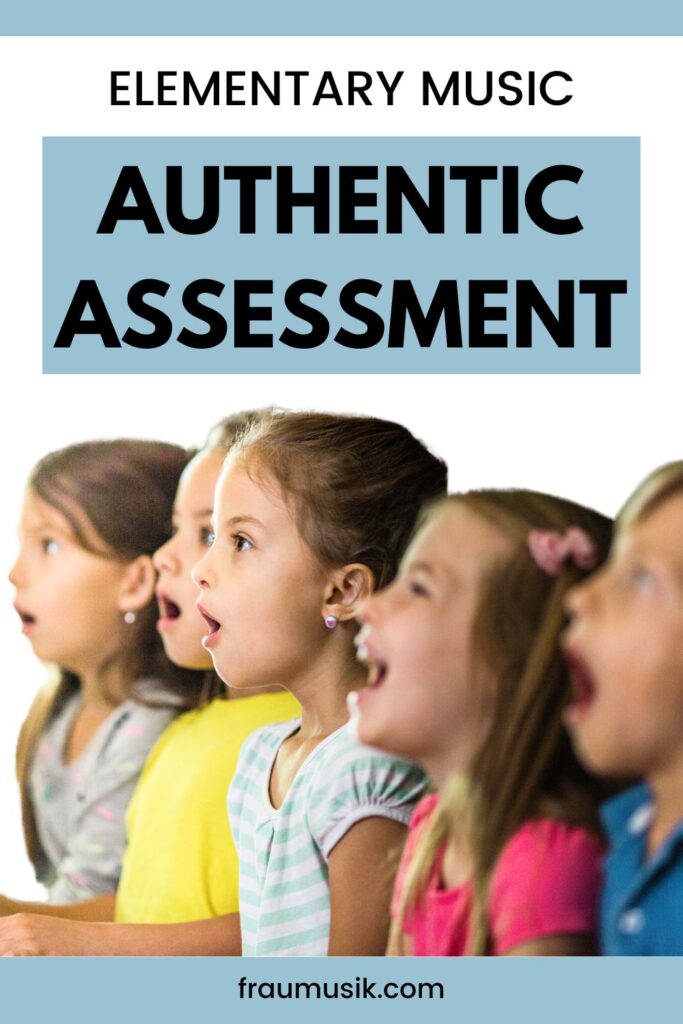
It’s important to integrate assessments into class activities naturally. Assessments should be FUN and never stressful for students.
What’s in this post? Click to open the Table of Contents
- Establish Clear Learning Targets
- Use Take it Home Sheet Music Pages as Observational Assessments
- Allow Plenty of Rehearsal Time
- Pick up Supplies and Move to Expanded Seating Arrangement
- Share the Song as “Homework”
- Reward Exemplary Work
- No-Prep Resources with Built-In Assessment
- Assessment in Elementary Music Should be FUN
- Free Music Reading Lesson with Take it Home Sheet Music Pages
Establish Clear Learning Targets
I created “Take it Home” sheet music pages as quick observational assessments. Each song-based activity includes specific rhythm and pitch reading learning targets written as easy-to-understand “I Can” statements.
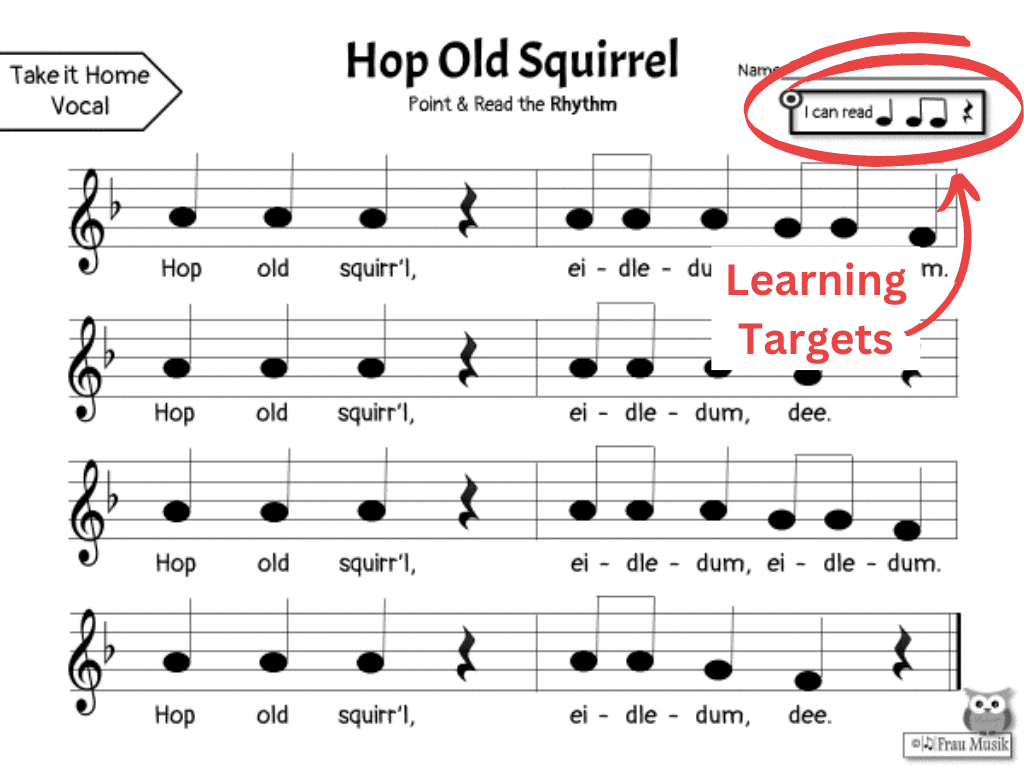
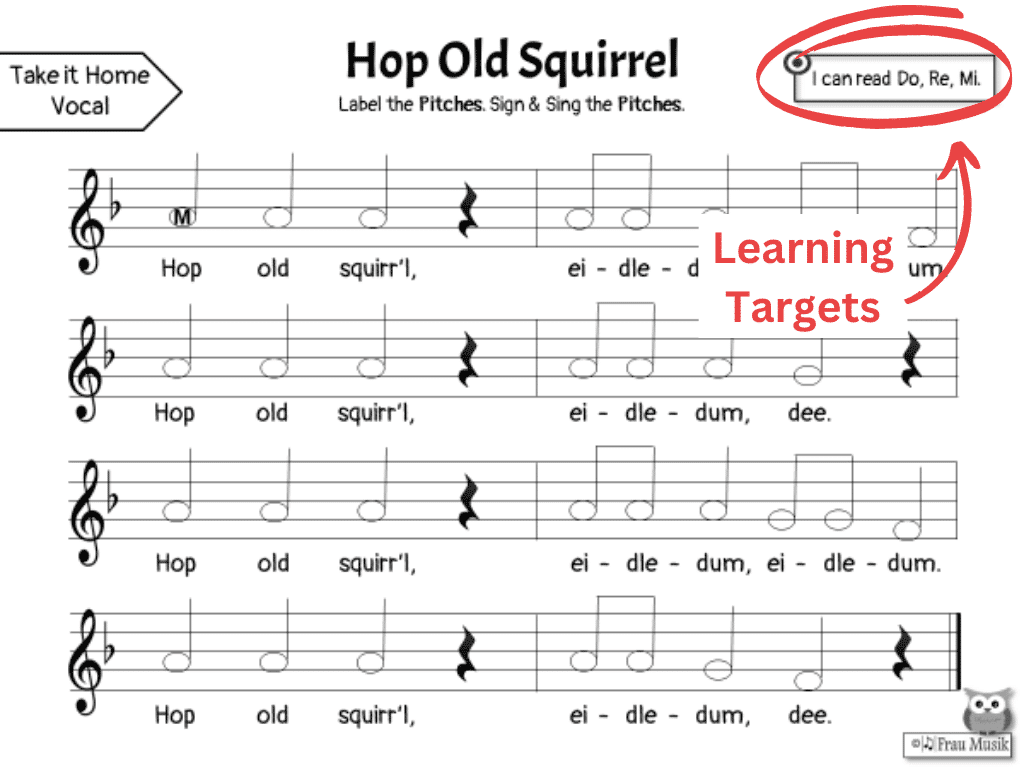
The Take Home Sheet Music pages facilitate practice and observational assessment. They also give students an opportunity to extend their learning at home.
Use Take Home Pages as Observational Assessments
The Take Home sheet music included in these Music Reading Activity Bundles is a simple but effective way to help kids build and demonstrate their music reading skills. These activities require VERY little, if any, writing.
This is an important step to develop independent music readers in the elementary grades and it doesn’t take long once you’ve taught your students an efficient, effective process. Take a peek at the detailed routine below which I used for many years.
Allow Plenty of Rehearsal Time
Before students are asked to do any assessment, they should have adequate practice. As a general rule, we practiced each song for three class sessions before we completed the assessment and I assign it for homework.
If this is the first time you’ve introduced a new rhythm or pitch, you may want to provide additional practice before you assess. Do NOT give an assessment if your observations indicate less than 80% of your students are able to read independently and will be successful. I prefer to use a benchmark of 90% success rate.
Get Supplies and Move to Expanded Seating Arrangement
Keep students active and engaged singing or chanting while they pick up their supplies. Use every second of class time in a productive way.
I wrote a song called “Write Your Name.” We would often sing this simple song as we pick up our sheet music and pencils. This song prompts students to write their names on their music as soon as they get back to their spots without any further directions from me.
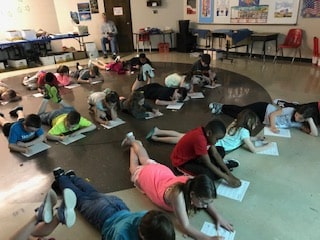
For variation, we learned to sing the song in German too. Or, we choose another familiar song to sing as students picked up their music and pencils. Routines are crucial but it’s also important to keep those routines fresh.
- Have student supplies ready and easily accessed.
- Students stay in their seating order and lead from one end of the row to pick up their music and pencils. (This eliminates any jostling for who will be the first in line.)
- As students move and sing, have them circle around and re-seat themselves in an expanded seating position with more space between the rows.
In my music classes, students sat on the floor and the expanded position gave them room to lay down and get comfortable to write.
1. Read the Rhythm
Together as a group, students “point and read” the rhythm of the song. Make sure each and every student points to each note on their music as they read. This is an integral part of developing one-to-one correspondence from symbol to sound. This is also how I assess students.
I scan the room to see who is reading accurately and who is lost. If someone has trouble the first time, without calling anyone out, I often say something like this, “Oops. Someone got lost. Let’s give them another chance.” Then, we point and read the rhythm one more time as a group.
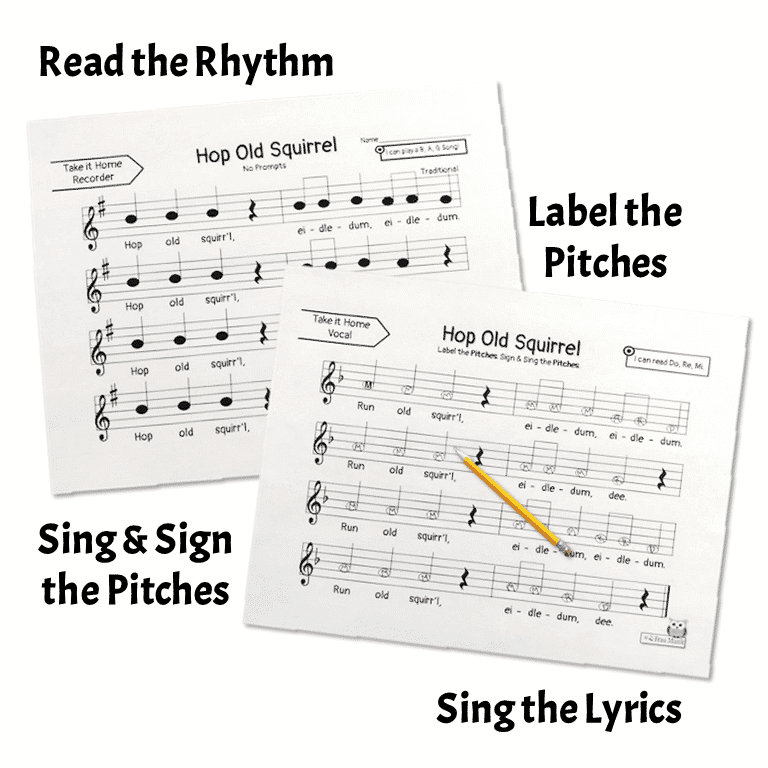
2. Label the Pitches
On the other side of the paper, students label the solfege pitch names: S = So, M = Mi, etc. Except for writing their name on their paper, this is the only writing in the entire activity. The written portion of the lesson is minimal but very important. I could easily identify students who were reading independently and who needed more practice.
3. Check Their Own Work
Next, students check themselves and practice silently signing and singing their answers. Don’t skip this step. Most of the time students will catch their own mistakes. This step also teaches students to “hear” the music internally while reading silently.
4. Partner Check
After both partners have checked their own work and practiced silently and independently, they partner-check for each other. Partners help each other. That’s their job. If a student made a mistake, it is okay to change their answers. The goal is to have the pitches correctly labeled.
During this step, I watched to see if anyone made frequent mistakes. I took this into account when I recorded grades. I did not factor in a simple mistake here or there.
5. Sign and Sing the Pitches
As a group, I had students sign and sing the pitches from their papers “into the grade book” as I visually scan and record grades. It’s evident who the exceptional readers and leaders are and who may be struggling. Since most of our music reading songs are only 18-30 seconds long, this step takes only a few seconds.
6. Sing the Lyrics
As the final step, students sang the lyrics. As they sang the song, I would finish grade entry and prep for our next activity. The entire process should be well ordered and there should be NO downtime.
Helping your students learn an efficient process to complete Take Home pages and assessments takes a little trial and error. But, be consistent and your students will pick it up quickly.
Share the Song as “Homework”
As students’ “homework”, they would repeat this process for someone at home.
- Read the rhythm.
- Sign and sing the pitches.
- Sing the lyrics.
To see more about how to use Take Home pages to extend learning and build advocacy for your music program, take a peek at this post, “Homework in Elementary Music Classes, Really?”
Reward Exemplary Work
Our school used various systems of rewards. While students worked, I would circulate around the room and silently drop “tickets” to students who were doing a great job as they practiced or helped their partners.
Use whatever system you have in place in your classroom or at your school to recognize students who work hard and help each other.

No-Prep Resources with Built-In Assessment
Each Activity Bundle below includes Take Home Sheet Music and Digital Music Notation Easel Activities which may also be used for practice and/or assessment. The resources below include the following elements.
- Projectable PowerPoint lessons (compatible with Google Slides)
- Interactive DIGITAL Easel Activities
- Printable Take it Home pages
- Games, songs, instrumental activities, and more
Click below to learn more about these complete NO-PREP Music Reading Activity Bundles.

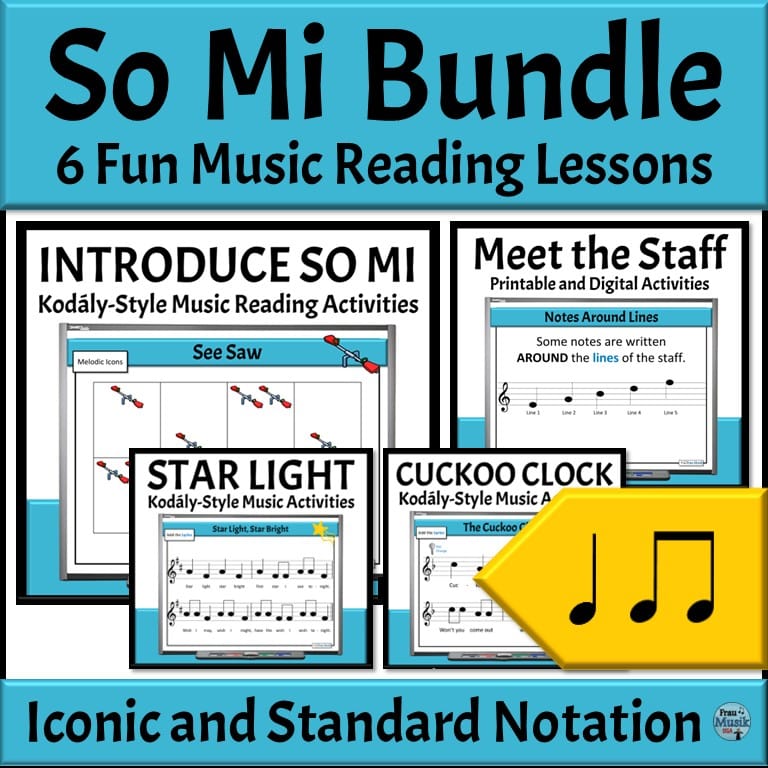
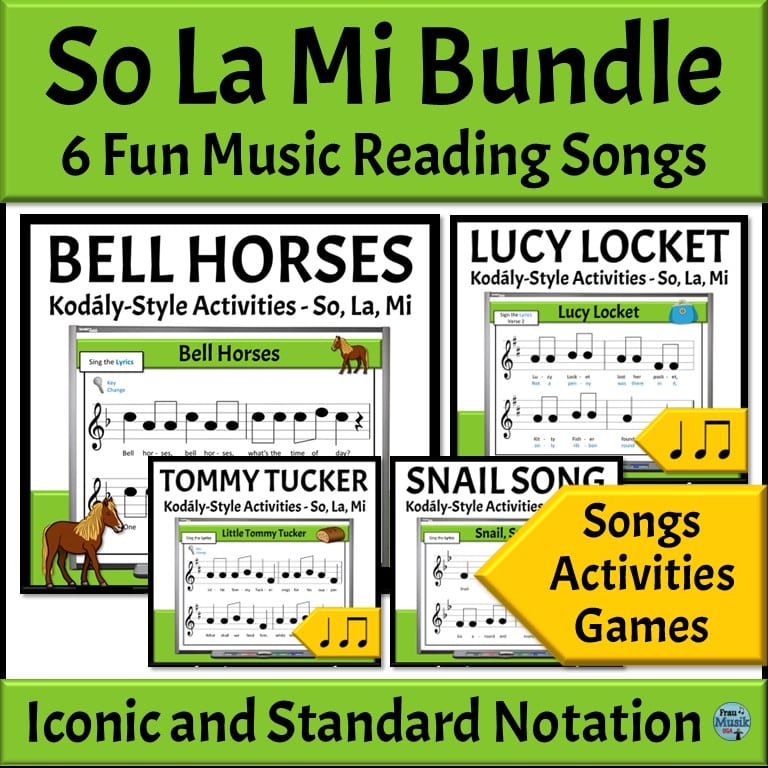
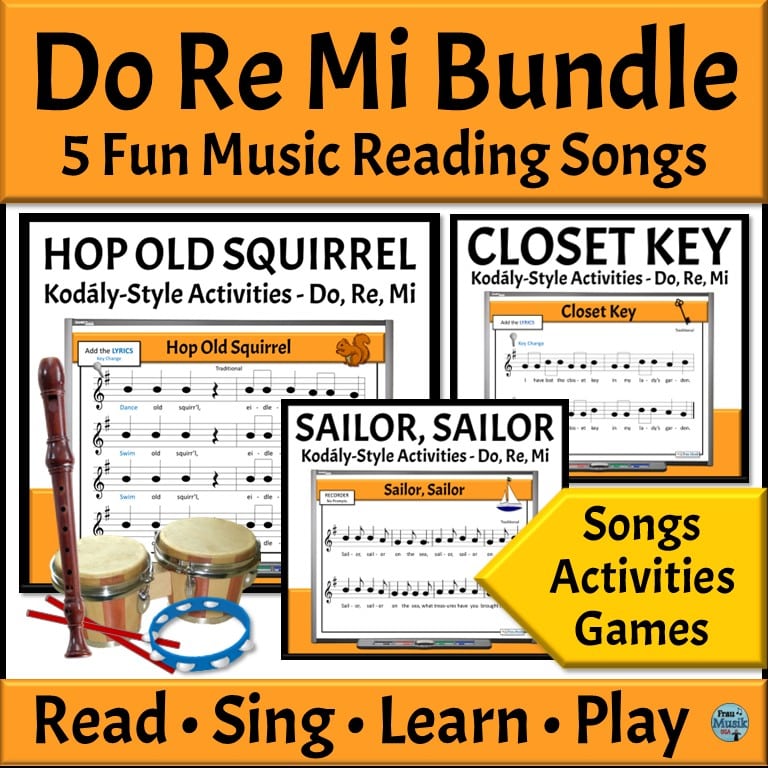

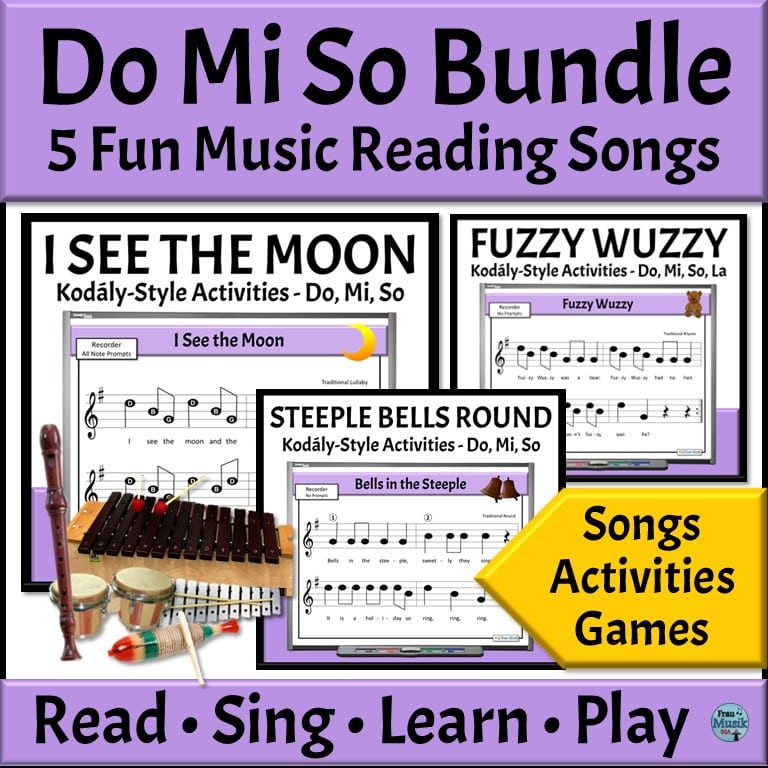
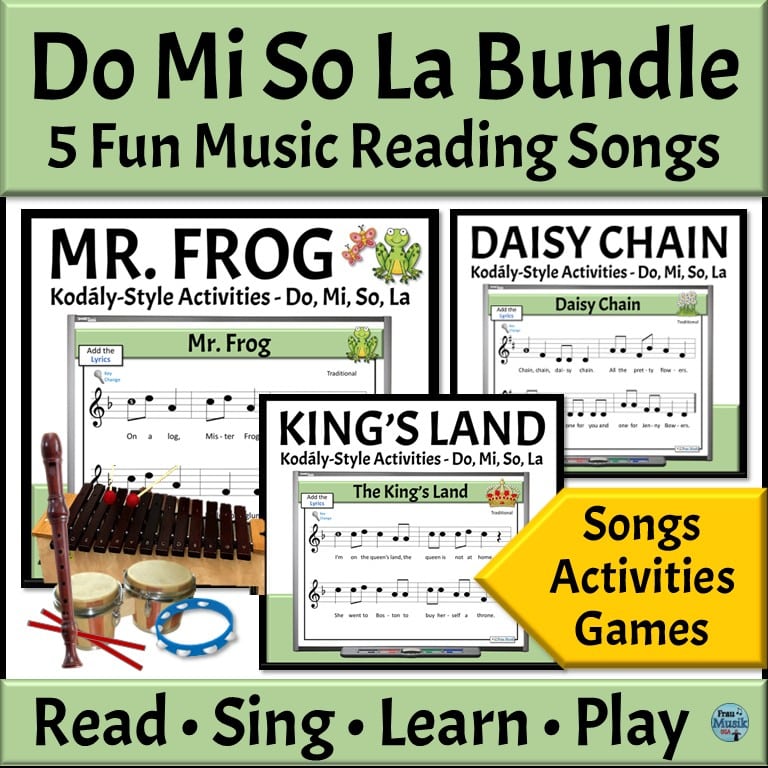
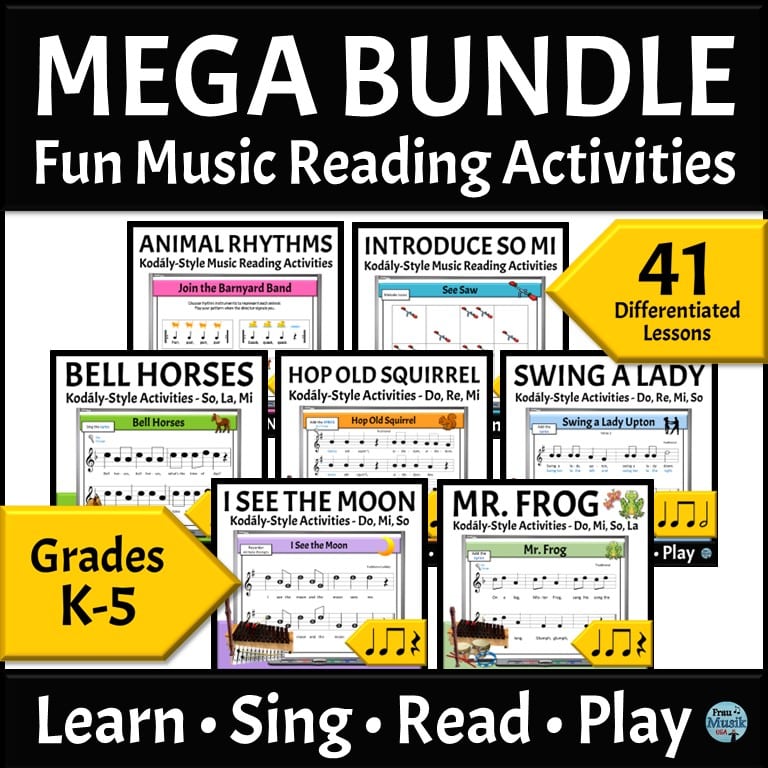
Save over 35% when you invest in the No-Prep Mega Bundle.
Elementary Music Assessment Should be FUN!
Assessment in elementary music should be a natural part of class activities and it should be FUN! Learning targets and assessments should develop REAL music reading skills. And, Take Home sheet music helps you to involve and inform your parents and challenge students to extend their learning at home.
Using a sequential, song-based music reading repertoire and assessment system meant I didn’t have to constantly search for, or create new assessments. A clear music literacy plan made it easier to stay on track and simplified my weekly lesson planning.
A simple to implement system that kid’s enjoy and extends learning at home is a WIN, WIN, WIN!
Looking for more simple, meaningful ways to assess music reading in the elementary music classroom?
Browse these elementary music literacy lesson ideas and teaching strategies that support real music reading skills.
Free So, La, Mi Music Reading Lesson with Take it Home Pages
Meet the Author

Terri Lloyd is a former K–5 music educator with more than 30 years of experience teaching elementary music.
Her credentials include:
- Bachelor of Music
- Master of Science in Education with an elementary music focus
- Missouri State Teaching Certificate, Vocal and Instrumental Music, Grades K-12
- Kodály Certification Levels I–III
- Instructional Technology Certificate in Curriculum and Design
Through Frau Musik USA, Terri helps elementary music teachers build students’ music literacy and performance skills with practical lessons and activities grounded in real classroom experience.
She develops music curriculum resources, presents music education workshops, works as a church musician, and K–5 Sunday school teacher. Terri also performs with a local big band, pit orchestras, and at community events.
3 Comments
Comments are closed.