Innovative Ways to Use Boom Cards – Elementary Music Lesson Ideas
Music Boom Cards are an important tool to develop music reading skills. Check out these elementary music lesson ideas for your classroom.
Some of the links on this site are affiliate links. If you click on a link and make a purchase, I may earn a small commission at no cost to you.
Looking for fun and effective ways to build music literacy skills? Music Literacy Boom Cards are interactive, no-prep tools that fit seamlessly into elementary music lesson plans.
They give students attainable challenges, instant feedback, and the motivation to try again (all in a game-like format). Even better? You don’t need 1:1 devices!
Below are practical, innovative ways to use Boom Cards with whole-class teaching, manipulatives, centers, differentiated instruction, and more.
What’s in this post? Click to open the Table of Contents
Start with Song-Based Lessons. Reinforce with Boom Cards.
Every strong elementary music program starts with songs, games, and active learning. Once students have experienced targeted musical elements through singing and movement, Boom Cards become a great way to reinforce and assess what they’ve learned.
👉 Need a song-based teaching framework? See: How to Develop and Assess Music Reading Skills.
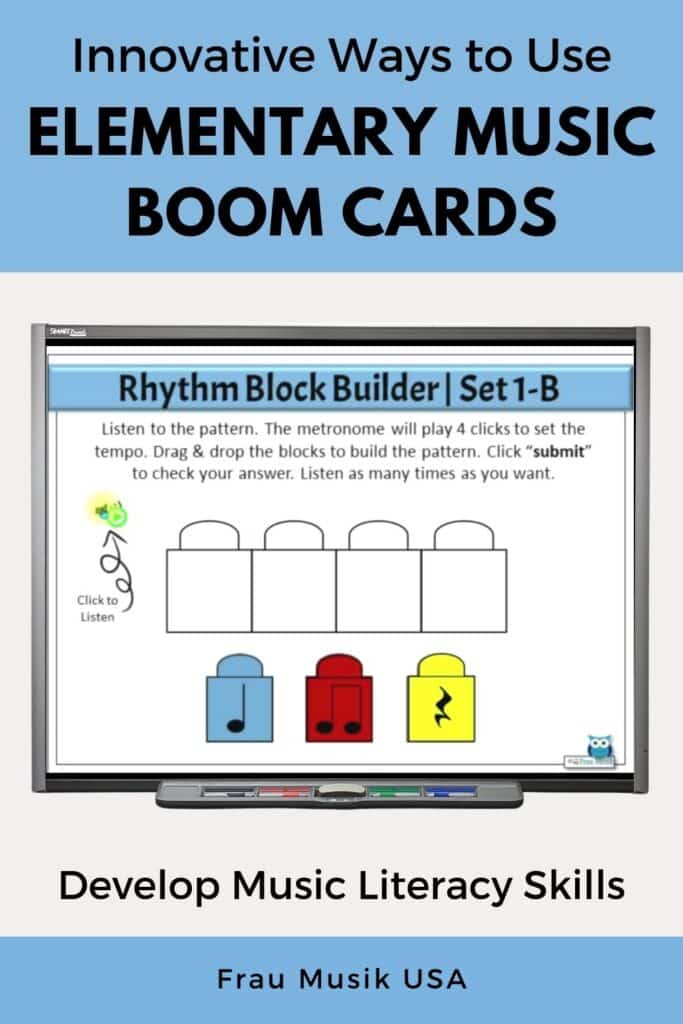
Whole-Class Boom Cards on Whiteboard
Boom Cards work well even when you don’t have enough devices for every student. Display a deck in presentation mode and have the whole class respond together.
Ways Students Can Respond
- Sign language.
- Rhythm blocks.
- Popsicle sticks or pretzels.
- Printable manipulatives.
- Dry-erase boards.
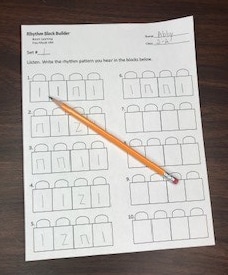
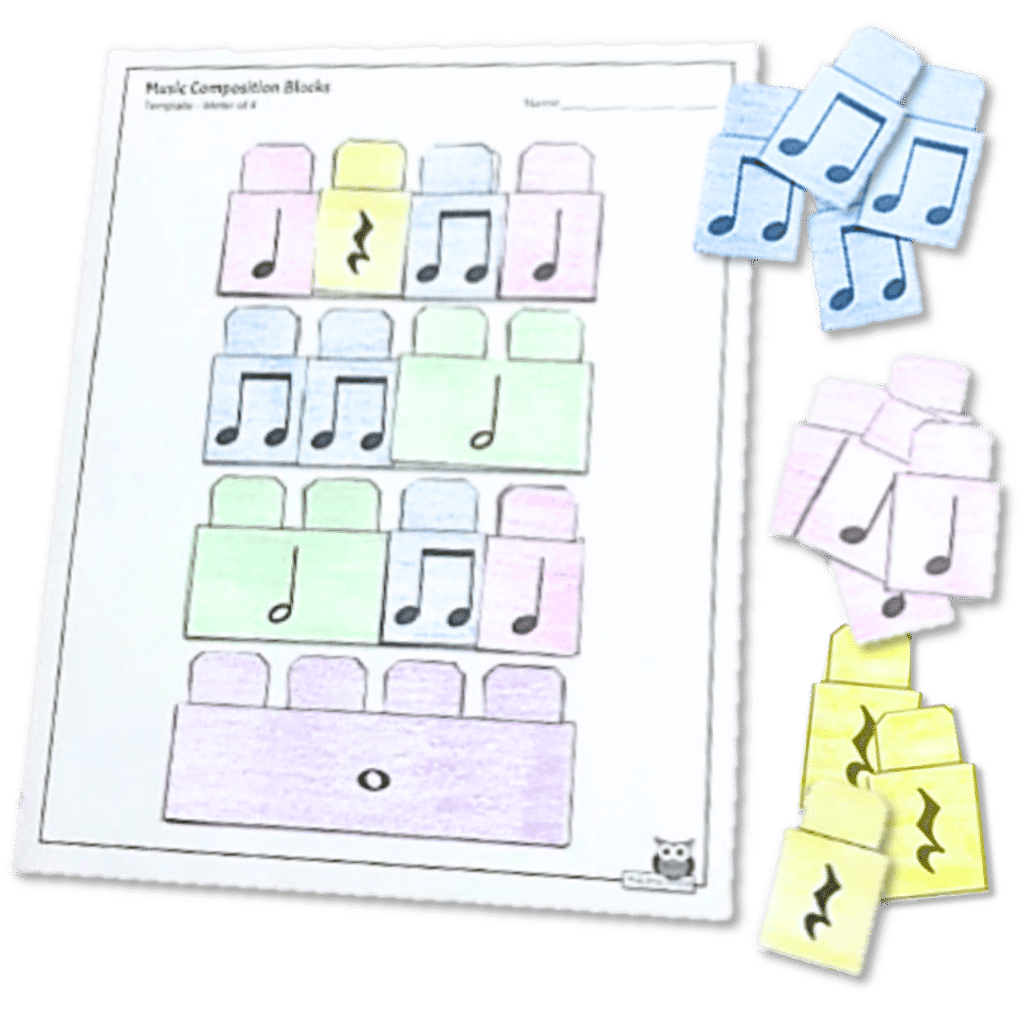
1. Rhythm Dictation with Block Templates
Use this printable Rhythm Block Template for students to write the rhythms they hear.
Or, print on cardstock and laminate for easy reuse with dry-erase markers.
(Use with Rhythm Dictation Bundle.)
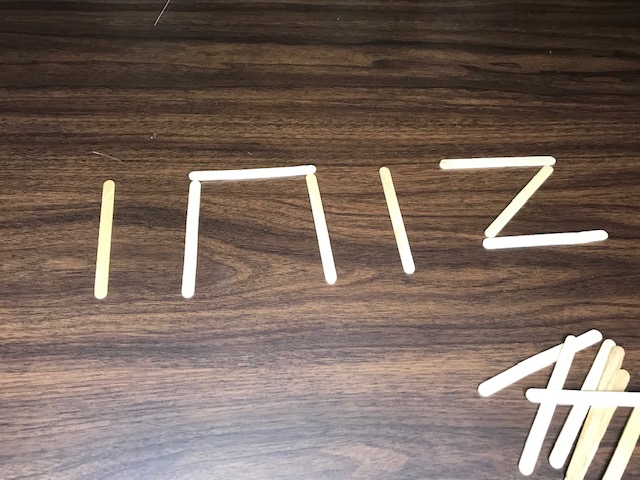
2. Popsicle Sticks or Pretzel Dictation
Give students a fun tactile option and build rhythms with manipulatives. Or, try “pretzel dictation” and let students eat their work when done!
(Use with Rhythm Dictation Bundle.)
3. Printable Manipulatives and Rhythm Dictation
Use Color, Cut, and Compose rhythm blocks as dictation manipulatives. When students color each of the rhythmic notes the same color, it’s easy for you to scan the room and check for understanding.
Use printables for dictation or composition. Laminate for reusable classroom sets.
(Use with Rhythm Dictation Bundle.)
4. Melodic Dictation Ideas
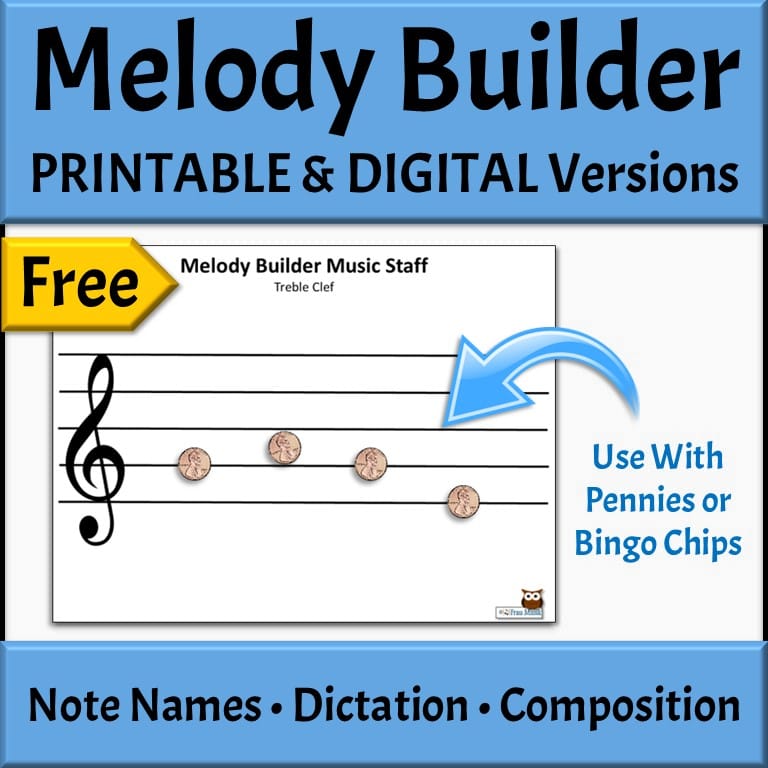
Pair Boom Cards with simple manipulatives to help students internalize pitch relationships.
Simple Classroom Manipulatives
- A laminated treble clef staff.
- Pennies or bingo chips for note placement.
- Yarn or pipe cleaner for ledger lines.
Use with:
- Melodic Dictation Boom Cards (Key of C)
- Melodic Dictation Boom Cards (Key of F)
- Melodic Dictation Boom Cards (Key of G)
5. Answer Using Sign Language
For multiple-choice Boom Cards, students can answer using sign language or hand signals. It’s quick, no-prep, and inclusive.
Works well with:
Tip: Have students hide their hands for “think time,” then show their answer simultaneously.
6. Use Boom Cards in Centers or Stations
Boom Cards make excellent center activities, but include a way to track progress. (Using the FastPin or FastPlay links doesn’t automatically track student scores.)
- Provide a simple response sheet.
- Have students screenshot scores and submit online.
If your school has a paid plan, you can track student scores. This is not required for most music teachers.
7. Game Day or Rewards
Boom Cards can also be a low-prep reward for the whole class!
- Earn a Boom Cards Day.
- Let fast finishers play while others catch up.
- Reinforce music skills during sub days.
8. Practice at Home
Assign differentiated decks to meet your students’ needs. Students progress at their own pace. They can practice both at school and at home using FastPlay links.
Allow your advanced students taking private lessons to soar!
Final Thoughts
I was skeptical at first, too. Can a digital game build REAL music literacy skills?
But Boom Cards aren’t just fun—they’re effective tools for meaningful learning in the music room.
🎁 Start with a few Free Sets and see what happens!
Real learning happens in the music room!
Meet the Author

Terri Lloyd is a former K–5 music educator with more than 30 years of experience teaching elementary music.
Her credentials include:
- Bachelor of Music
- Master of Science in Education with an elementary music focus
- Missouri State Teaching Certificate, Vocal and Instrumental Music, Grades K-12
- Kodály Certification Levels I–III
- Instructional Technology Certificate in Curriculum and Design
Through Frau Musik USA, Terri helps elementary music teachers build students’ music literacy and performance skills with practical lessons and activities grounded in real classroom experience.
She develops music curriculum resources, presents music education workshops, works as a church musician, and K–5 Sunday school teacher. Terri also performs with a local big band, pit orchestras, and at community events.
9 Comments
Comments are closed.