10 Tips to Integrate Fun Music Reading Activities Into Every Elementary Music Class
Time is precious in elementary music class. It’s important to integrate music reading into every lesson with an efficient teaching strategy.
Some of the links on this site are affiliate links. If you click on a link and make a purchase, I may earn a small commission at no cost to you.
Time is precious in the elementary music classroom. With limited minutes each week, it’s challenging to make music reading a consistent part of every lesson.
Even with these time constraints, you can integrate music reading into every elementary music class and develop confident, independent music readers.
The key is using a simple, efficient teaching approach that introduces musical elements in a sequential order and builds on prior learning. Music reading activities also need to be student-friendly and fun, for both students and teachers, to be sustainable over time.
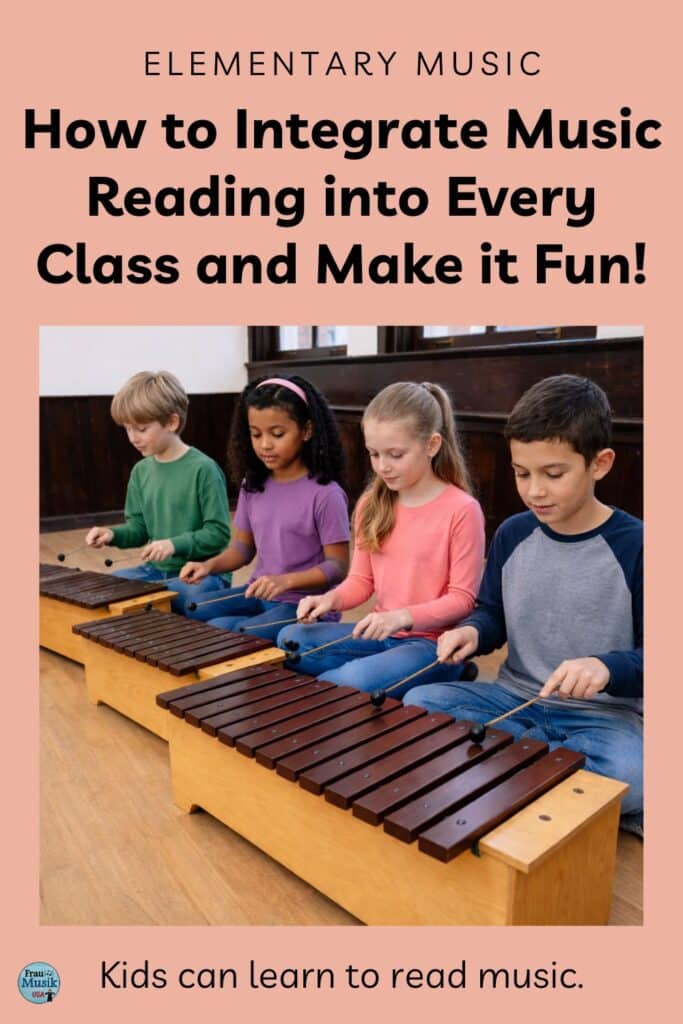
So how do you make music reading a priority while also preparing for performances, assemblies, and the day-to-day realities of teaching?
The strategies below offer practical, classroom-tested tips to help music reading become a natural part of every elementary music lesson.
What’s in this post? Click to open the Table of Contents
Actionable Tips to Integrate Music Reading into Every Elementary Music Class
Every school and every music classroom has unique specific needs. But, we also have many things in common. The strategies and tips below are beneficial for any elementary music class.
Share this post to help fellow elementary music teachers find it.
1. Use a Standard Lesson Plan Template and Establish Routines
A consistent lesson plan template helps ensure music reading activities are intentionally built into every class. Schedule short, interactive music literacy activities early in the lesson so they don’t get pushed aside when time runs short.
A predictable lesson structure also supports strong classroom routines. Students respond better when they know what to expect, and clear routines help them feel safe, focused, and ready to learn. While lessons should stay flexible, a familiar framework creates stability and saves instructional time.
Take time during the first few weeks of school (and again after long breaks) to teach and practice classroom procedures. This investment pays off throughout the year.
Elementary music teachers have a unique advantage: many students return year after year. Established routines in the early grades make transitions smoother and instruction more efficient in upper grades.
2. Use Fun and Focused Transition Activities
Begin each class with a brief transition activity as students enter the room. This helps focus attention and set the tone for learning.
Transition activities can serve multiple purposes: welcoming students, reinforcing skills, and preparing them for music reading. Keep these activities short, familiar, and purposeful.
Effective transition activity ideas include:
- Vocal warmups.
- Echo singing or chanting.
- Simple body percussion.
- Reviewing a familiar song or rhyme.
- Chant rhythm syllables for ROD (Rhythm of the Day) or targeted rhythm elements.
- Signing and singing targeted solfege syllables.
- Chant directions to set the stage for a specific activity.
Echo songs work especially well as welcome activities. A new song can even be introduced during entry by echo chanting lyrics first, then echo singing the melody.
The key is to plan transition activities with intention so they naturally lead into your music reading focus for the day.
Social Stories Can Ease Transitions
Social stories can be especially helpful for students who struggle with transitions. If students need additional support entering the music room, a short social story can reduce anxiety and increase success.
This free editable social story, Going to Music, can be customized to match your classroom routines. It may be read by a paraprofessional before music, or displayed and read by the classroom teacher prior to the class transition.
3. Start Class Immediately
Begin your welcome or transition activity the moment students enter the room. Greet everyone with a smile and make eye contact as you start the activity simultaneously.
Whether it’s singing, chanting, or echoing patterns, your opening activity should guide students directly to their assigned spots and prepare them to begin the planned music reading lesson.
Students who feel welcomed, noticed, and actively engaged are far less likely to cause disruptions. Starting class immediately eliminates downtime, sets clear expectations, and maximizes instructional minutes.
An efficient opening creates momentum that carries through the rest of the lesson and supports consistent music reading instruction.
4. Schedule Music Reading Activities Early in the Lesson
Place music reading activities near the beginning of every lesson, right after your welcome or transition activity.
Student attention is naturally higher at the start of class. This is when both students and teachers are most focused, making it the best time to prioritize music reading. If music literacy is a goal, it needs to be treated as a priority.
5. Keep Music Reading Lessons Short
Music reading instruction doesn’t need to take a long time. A short, focused routine is more effective than a lengthy lesson.
Use this simple 3-step process to make music reading clear and repeatable:
- Read the rhythm using your preferred rhythm syllables.
- Sing the pitches using solfege.
- Sing the lyrics.
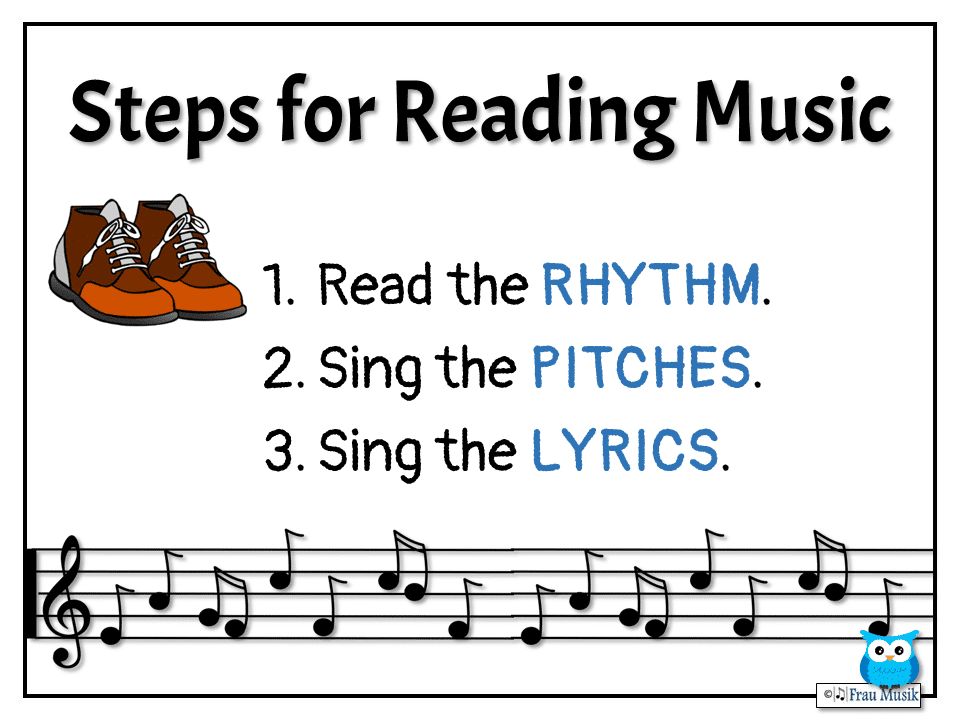
This process should take 3–5 minutes or less.
6. Music Reading Lessons Should Lead to Fun Activities
Music reading instruction should never feel isolated or disconnected from the rest of the lesson. Instead, it should act as a launch point for active music-making.
When music reading leads directly into a fun, related activity, students understand why they are reading the music and stay motivated to participate. After a brief music reading routine, transition immediately into an activity that reinforces the targeted skill.
Effective follow-up activities could include:
- Musical games.
- Movement activities.
- Instrumental accompaniments.
- Ostinato patterns.
- Rounds, partner songs, simple harmonies, or easy descants.
Keeping the reading portion short and pairing it with an engaging activity builds excitement and helps students view music reading as a natural part of making music and not a separate task.
This approach reinforces deeper learning, increases retention, and keeps lessons fun for both students and teachers.
7. Use Repetition and Take-Home Pages for Assessment
Repetition is essential to develop independent music readers. Each time students revisit a music element, they rely less on teacher support and gain confidence in reading music independently.
The same music reading concepts should be practiced across multiple class sessions and through multiple songs before moving on to new music elements. This allows students time to internalize skills rather than simply “cover” objectives.
Use Simple Take-Home Pages as Quick, Authentic Assessments
Short take-home music reading pages can serve as both reinforcement and informal assessment. These activities are very short, familiar, and easy for students to complete. (Bonus: There’s NO grading for teachers.)
This simple process works well:
- Students demonstrate rhythm reading, pitch reading, and singing for someone at home.
- The activity takes less than one minute.
- Nothing is returned or graded on paper.
Learn More About “Homework” in Elementary Music
This approach works well when students are confident with the targeted music reading skill. For a deeper look at expectations, logistics, and parent communication, see this post:
👉 Homework in Elementary Music Classes, Really?
Used thoughtfully, repetition and simple take-home activities reinforce learning, build confidence, and strengthen music literacy (and build advocacy for your music program) without adding stress for students or teachers.
8. Use Fun, Sequential, and Targeted Music Reading Lessons
Music reading instruction is most effective when lessons focus on only one new musical element at a time. This allows students to learn quickly, feel secure, and apply new skills with confidence.
Each music reading lesson should:
- Target a single rhythm or pitch element.
- Build directly on previously learned concepts.
- Use familiar musical elements with varied repertoire.
When students practice the same musical element in multiple songs and activities, they learn to generalize their skills instead of just memorizing one piece of music. This leads to stronger, more independent music reading.
Save Time with Complete Music Literacy Lessons
Using pre-planned, sequential materials can save significant prep time while keeping instruction focused. Complete music reading lessons that include songs, games, instruments, and follow-up activities make it easier to maintain consistency across classes.
Well-designed materials support repetition, differentiation, and long-term skill development without reinventing lessons each week.
👉 Take a peek at these sequential Music Reading Activity Bundles.
9. Kodály-Style Sequence: Prepare, Present, Practice
Music reading instruction works best when skills are introduced in a developmentally appropriate sequence. A Prepare–Present–Practice approach provides a clear structure for building music literacy.
You don’t need to follow any method exactly. Many teachers use an eclectic approach that blends multiple strategies. However, a Kodály-inspired sequence often serves as a strong foundation for music reading instruction.
Prepare
Students experience new musical elements aurally first through singing, chanting, movement, and listening. This stage builds familiarity with sound before symbols are introduced.
Present
The same song or activity is used to introduce the visual notation. Students connect what they already know by sound to what they now see on the page.
Practice
Students revisit the element across multiple class sessions and in multiple songs. “Add-on” activities keep practice fresh while reinforcing the same reading skill.
Skipping the preparation stage makes music reading harder than it needs to be. Just as children learn to speak before they read words, students need a strong foundation of sound before reading music.
Note: Some teachers choose to introduce standard notation right away, while others begin with stick notation. For a deeper discussion, see Standard Notation vs. Stick Notation.
10. Be Efficient with Time and Materials
Instructional time in elementary music is limited, so efficiency matters. Move from one activity to the next with minimal downtime. Even short pauses can lead to lost focus and unnecessary disruptions.
Have all materials prepared and organized before class begins. Clear transitions and a steady pace help students stay engaged and maximize learning time.
Simple Ways to Save Time
- Upload and organize all audio files in advance.
- Use one presentation (PowerPoint or Google Slides) to house visuals, directions, and audio links.
- Embed or link recordings directly into slides.
- Include direct links to any online resources you plan to use.
These systems reduce interruptions, keep lessons moving, and allow more time for meaningful music-making and music reading.
Bonus Tip: Pare Down – Less Is More in Elementary Music
Planning with intention often means doing less, not more. A smaller, well-chosen repertoire allows students to experience deeper learning through repetition and varied practice.
Choose songs and activities that:
- Teach specific rhythm or pitch elements.
- Fit into a clear, sequential literacy plan.
- Can be reused across multiple lessons with different add-on activities.
Using fewer songs more effectively saves time, reduces your planning load, and leads to stronger music reading skills.
Final Thoughts: Music Reading Belongs in Every Lesson
Music classes are active, creative, and joyful, but they are also instructional. Integrating music reading into every lesson helps students build skills that support long-term success.
When music reading is taught in short, focused bursts and reinforced through meaningful activities, students grow into confident, independent music readers. Even with limited class time, consistent and efficient instruction makes a real difference.
For more ideas, strategies, and ready-to-use lessons,
visit the Elementary Music Literacy page for additional support and inspiration.
Meet the Author

Terri Lloyd is an experienced music educator with over 25 years of teaching in elementary music classrooms. She holds a Master’s in Education, an Instructional Technology Certificate in Curriculum Design, and a Bachelor of Music. Her resources are designed to help music teachers develop students’ music literacy and performance skills while enjoying learning.
She presents music education workshops, develops curriculum, and writes for her blog. Terri is on the music staff at her church and leads a children’s program. She performs as an active community musician with a local Big Band, pit orchestras, and at various events.
13 Comments
Comments are closed.