How to Simplify Elementary Music Lesson Plans with FREE Yearly Planning Charts
Creating weekly lesson plans can be exhausting. Check out these tips to simplify your elementary music curriculum and make lesson planning a breeze.
Some of the links on this site are affiliate links. If you click on a link and make a purchase, I may earn a small commission at no cost to you.
Our school used to have an elementary music curriculum that was incredibly detailed. It was over a hundred pages long, wordy, and difficult to use.
The current curriculum is completely different. It’s much shorter, which is good. But it’s very general and vague. A beginning teacher won’t have much guidance from this document. And, since there are 11 elementary schools in our district, students who transfer from one school to another may find themselves unprepared for the activities in their new music classroom.
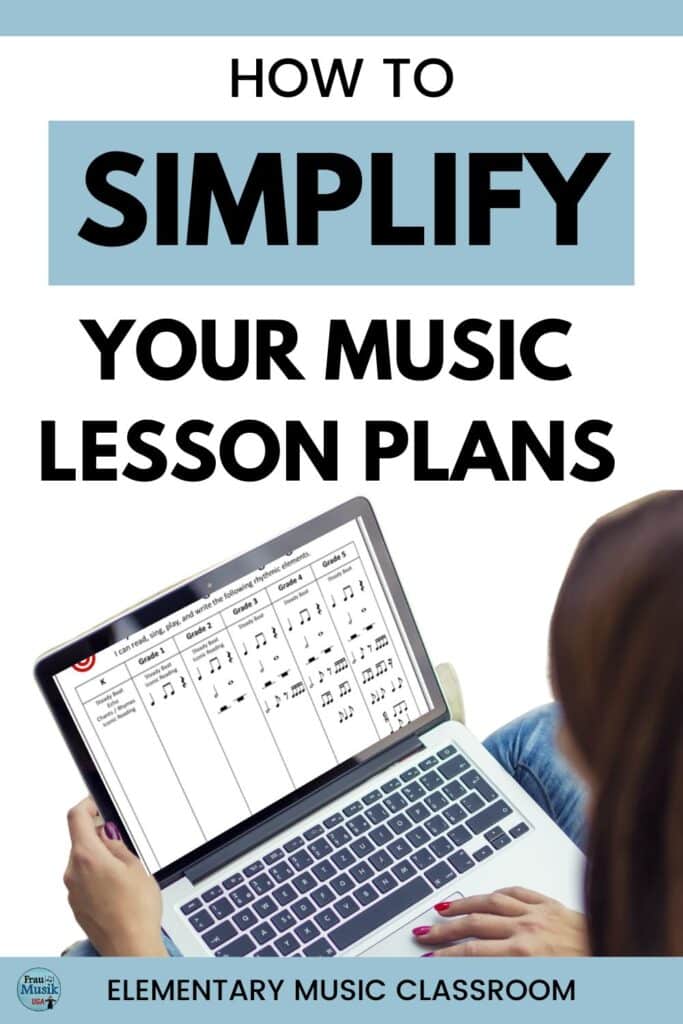
The ideal music curriculum probably lies somewhere in between these two documents. Below are some tips to simplify and clarify and organize your elementary music curriculum. This will make your weekly and daily lesson planning much easier and help you create more efficient and effective classroom lessons.
Create Simplified Charts of Your Elementary Music Curriculum
To provide an overview of our comprehensive curriculum, I created two concise charts that summarize the key music literacy elements taught at each grade level. These charts serve as a streamlined representation, focusing specifically on the fundamental rhythmic and melodic components.
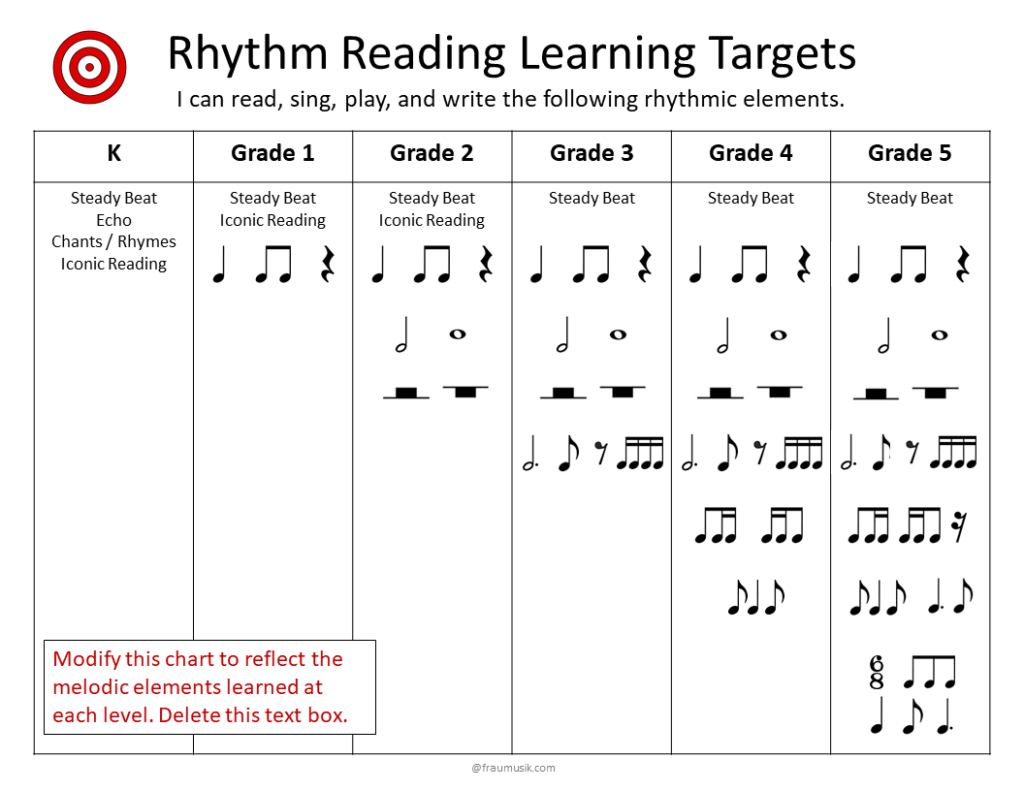
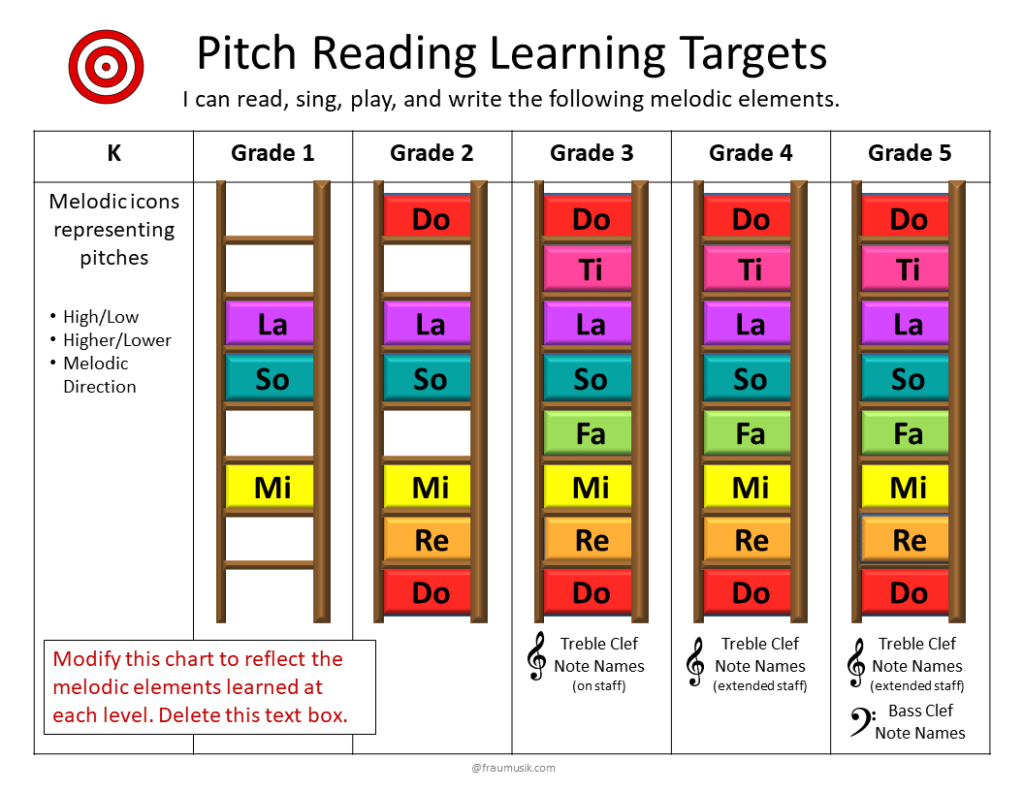
Get a jumpstart on your yearly planning with these FREE Elementary Music Yearly Planning Charts and get my elementary music newsletter.
These charts are 100% EDITABLE so you may customize them to match your elementary music curriculum.
More Ways to Use These Elementary Music Curriculum Charts
These rhythmic and melodic learning target charts may be used in a variety of ways.
- Print them as classroom posters to display learning targets for students.
- Print charts as a flyer and distribute them to parents during open house or parent-teacher conferences.
- Add the charts to your planner as a reference guide for planning monthly, weekly, and daily lesson plans.
- Include the charts in student portfolios to track progress and showcase achievements.
Use Yearly Charts to Create a Monthly Scope and Sequence
Once your yearly charts are complete, the next step is to create a monthly scope and sequence for each grade level.
The first time you make monthly plans, it can feel like a lot. But after that, you’ll usually only need to make small updates from year to year. That is much easier than starting from scratch.
This is where my elementary music literacy Scope and Sequence Planning Charts can help. They give you a solid starting point for monthly planning, and they are 100% editable.
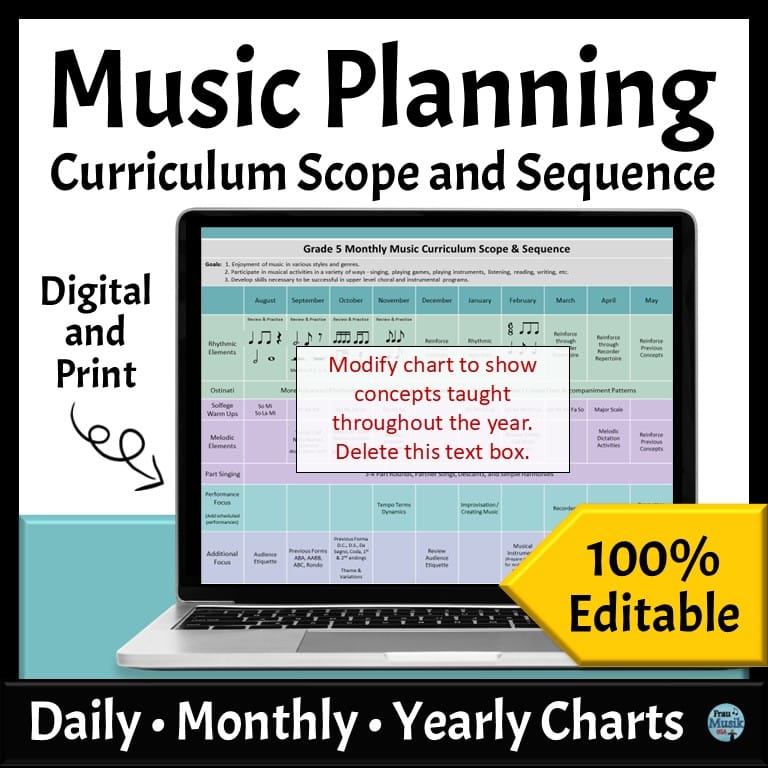
If you are new to monthly planning, don’t worry about making everything perfect. Make your best educated guesses, then adjust as you move through the year.
Monthly plans make it much easier to create weekly and daily lesson plans that:
- Are sequential and build on prior learning.
- Stay more coherent from week to week.
- Save you prep time when you’re planning future lessons.
When your yearly and monthly charts are in place, your elementary music curriculum becomes easier to manage, and your lesson plans become much easier to create.
Integrate Other Music Elements Naturally Through Performance Skills
Music literacy is more than rhythm and pitch reading. Students also need many opportunities to listen, perform, create, and respond musically.
As you build your monthly scope and sequence, look for natural places to include skills and concepts such as:
- Tone/Timbre
- Diction
- Dynamics
- Tempo
- Phrasing
- Articulations
- Form
- Meter
- Improvisation
- Composition
- Instruments of the Orchestra/Band
You do not need a separate lesson for every skill. These elements can be integrated naturally through repertiore. When you revisit familiar songs with a new focus, students get meaningful repetition without the lessons feeling stale. They continue building music literacy skills while also learning how to become more expressive, sensitive performers.
Looking for another simple way to reinforce music literacy and performance skills at the same time?
💡 Consider adding Vocal Solfege Tongue Twister Warm Ups to your routine. It’s a quick, focused, and fun way to build reading and performance skills.
Allow Plenty of Time to Practice and Learn Music Concepts
As you develop your monthly sequence, keep the following guidelines in mind.
- Be realistic and set an attainable timetable. Schedule grade-level performances into your monthly charts.
- Build in review. This is especially important if you frequently get new students.
- Teach and practice each music literacy song multiple times. Avoid treating them as “one and done” lessons.
- Keep songs fresh by adding different activities during each class session such as games, movement, Orff instrumental patterns, harmony parts, etc. I call these “add-on” activities.
- Reinforce the same music elements using multiple songs and activities to solidify learning.
It’s important not to rush the learning process. Help students develop and internalize music concepts by giving them many opportunities to practice singing, playing, reading, and “writing” the same musical elements in a variety of ways.
Creating Weekly and Daily Lesson Plans
Once your monthly charts are in place, weekly and daily planning becomes much easier.
Use your monthly sequence to plug in songs and activities that teach music literacy step by step. Keep the activities that have worked well, and revise or replace the ones that haven’t. Then, look for new songs, resources, and activities to fill any gaps.
Finding the right song or activity for a specific music literacy element can take time. My free Elementary Music Literacy Resource Guide can help make that process easier.
This guide includes an at-a-glance index of music elements, so you can quickly find activities that fit your students’ needs. It includes many free resources, along with helpful paid resources you may want to use as you plan.
“Everything Relates to Everything”
This is a frequent saying of one of my favorite college professors. And, she is right! Teaching music reading, technique, performance skills, music creation, and composition is all interrelated.
When you use yearly and monthly planning charts, you can easily organize your elementary music curriculum and develop coherent activities that build upon prior learning. This will allow you to create more sequential, effective, and efficient music lesson plans and save your precious time.
Everything does relate to everything.
➤ Remember to subscribe to my helpful email newsletter and get these Editable Elementary Music Yearly Planning Charts sent directly to your inbox.
Meet the Author

Terri Lloyd is a former K–5 music educator with more than 30 years of experience teaching elementary music.
Her credentials include:
- Bachelor of Music
- Master of Science in Education with an elementary music focus
- Missouri State Teaching Certificate, Vocal and Instrumental Music, Grades K-12
- Kodály Certification Levels I–III
- Instructional Technology Certificate in Curriculum and Design
Through Frau Musik USA, Terri helps elementary music teachers build students’ music literacy and performance skills with practical lessons and activities grounded in real classroom experience.
She develops music curriculum resources, presents music education workshops, works as a church musician, and K–5 Sunday school teacher. Terri also performs with a local big band, pit orchestras, and at community events.
Helpful Planning Resources
- 9 Summer Lesson Planning Tips for Elementary Music Teachers
- FREE Elementary Music Yearly Planning Charts
- Monthly Music Literacy Scope and Sequence Planning Charts
- FREE Elementary Music Literacy Resource Guide