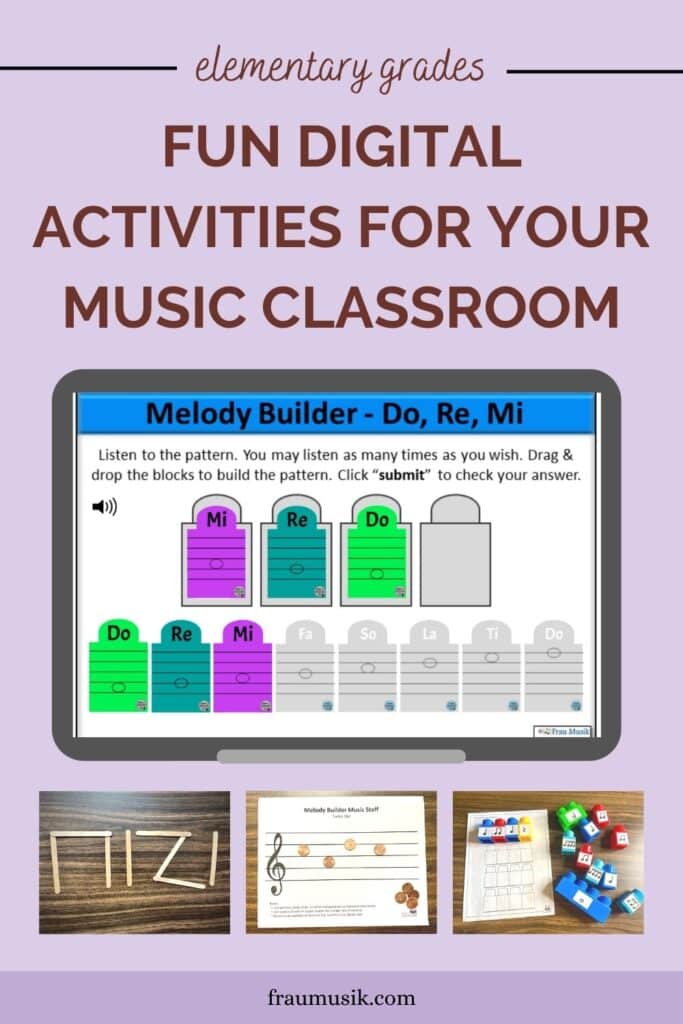
Fun Interactive Digital Music Activities for Elementary Students
Engage elementary music students with fun interactive digital activities that build real music literacy skills. Includes free Boom Cards, composition tools, and guided lessons.
Some of the links on this site are affiliate links. If you click on a link and make a purchase, I may earn a small commission at no cost to you.
Do you need solid music activities a long-term sub can teach with confidence? Or are you looking for more ways to strengthen music reading skills during class?
Elementary music teachers now use digital tools every day to help students learn basic music skills in a clear, structured way. Interactive activities are easy to teach, motivating for students, and work well across multiple grade levels.
Everything in this post was created specifically for the music classroom, but these lessons also work well for centers, small-group work, private studios, and homeschool families. If you’ve been wanting digital options that support real music-literacy growth, you’ll find a wide variety of ideas here.
Don’t miss the 8 free Boom Cards sets included below!
What’s in this post? Click to open the Table of Contents
Advantages of Interactive Digital Activities in Elementary Music
Digital activities can play a strong role in today’s music classrooms. When used intentionally, they support clear instruction, meaningful practice, and confident music reading.
- Consistent, Focused, and Efficient. Digital activities help you present concepts the same way across multiple classes, keeping instruction aligned and efficient.
- Motivating. Well-designed digital lessons challenge students to develop music literacy skills in small, attainable chunks.
- Sequential Series. These resources introduce one new element at a time, much like an instrumental method book. This makes it easy to reinforce concepts and track progress.
- Differentiation is Easy. Because several sets extend beyond typical grade-level focus, you can easily challenge students who take private lessons or need an extra push.
- Easy for Subs to Deliver. Digital activities give substitute teachers structure and clear content to guide lessons, even if they don’t have a music background.
Take a peek at the various digital activities below.
Interactive Music Composition Blocks – 4 Lessons in 1
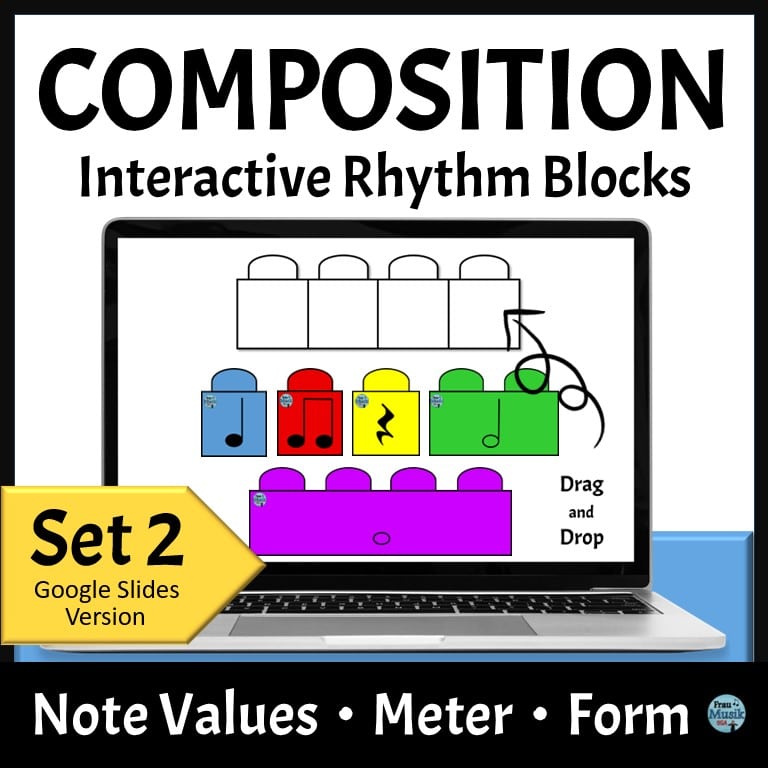
These interactive drag-and-drop rhythm blocks and music composition templates provide structure to help all students be successful while they learn valuable music reading skills. These activities are sure to be a hit with your elementary music students.
Each leveled set includes four separate lessons. Students create four different types of rhythm compositions, and each activity builds on the one before it. As students create, they learn about note values, meter, form, and even writing lyrics.
The Composition Blocks are available in PowerPoint and Google Slides. The bundles include all four differentiated sets, giving you options for multiple grade levels or for tiered instruction within a class. You can also assign them through Google Classroom or your school’s LMS.



Click here to see PowerPoint versions.
Pair Digital Composition Blocks with Printables
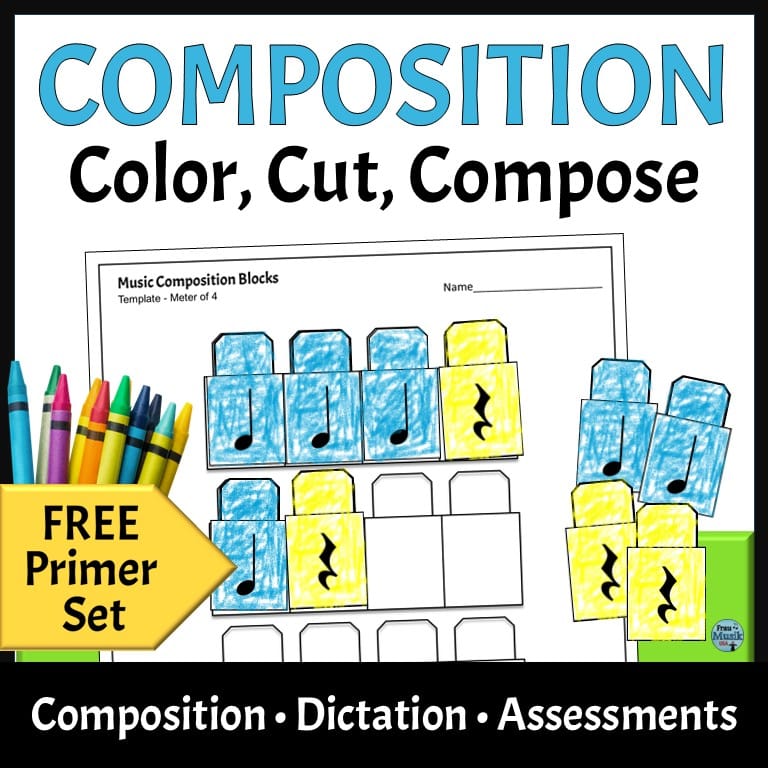
Lead students through the digital composition lessons above while students complete the composition activities with these PRINTABLE Color, Cut, and Compose blocks and templates included in this differentiated set.
Download this Free Primer Set for use with your early elementary students.
Meet the Instruments of the Orchestra and Band
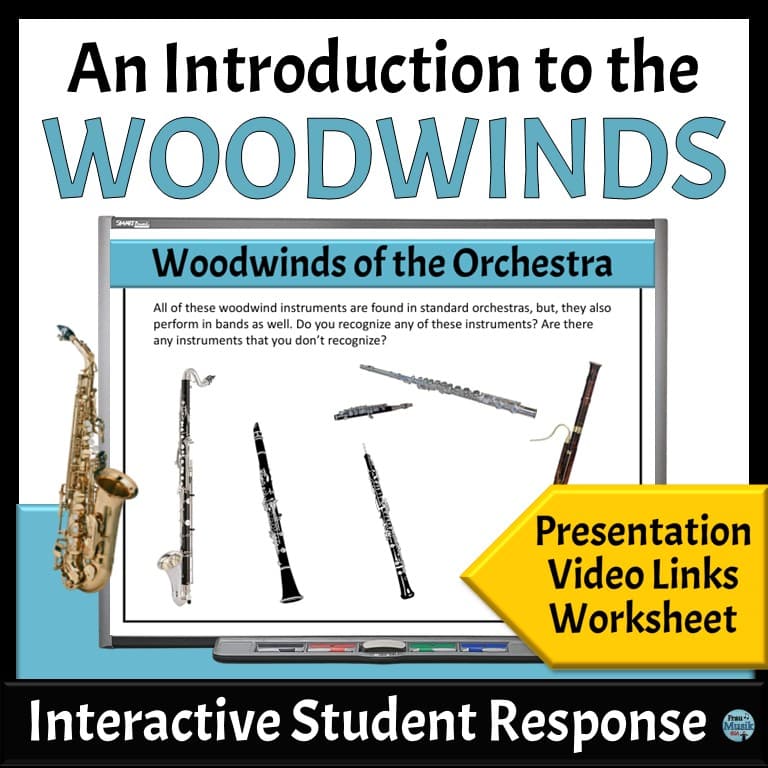
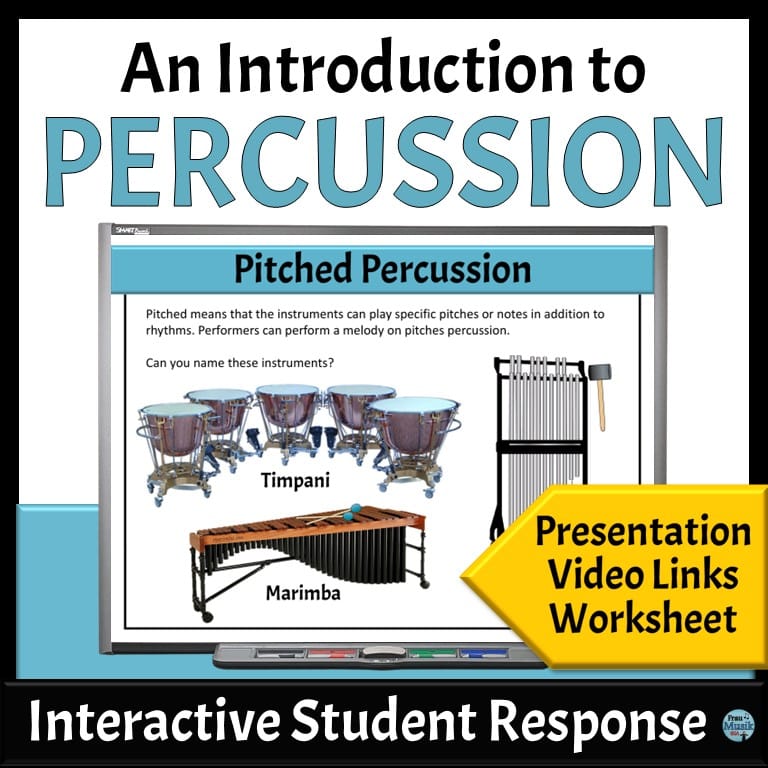
These guided PowerPoint lessons are fully compatible with Google Slides. Lessons make it easy to introduce instrument families in a clear, structured way. They’re designed for elementary music teachers, but they also work well for non-music subs and homeschool settings since everything is already built into the slides.
Each presentation includes quality images, sound examples, and simple prompts that keep students actively involved. Optional worksheets give you another way to reinforce music vocabulary, listening skills, and instrument recognition.


Save over 20% when you invest in the
No-Prep Complete Bundle.

Note: Video links come from professional orchestras or other kid-friendly sources. Please follow your school’s internet guidelines.
8 Advantages of Music Literacy Boom Cards
Our Music Literacy Boom Cards are built to teach real music reading skills in a way that’s easy for teachers and motivating for students. They work well across multiple grade levels and are helpful for practice, reinforcement, and quick assessments.
- No-Prep. Boom Cards are easy-to-use interactive activities.
- Motivating. The game-like format keeps students focused and encourages them to improve their accuracy.
- Students Get Immediate Feedback. Cards are self-checking, so students can listen again and fix mistakes.
- Repeat Decks. Because decks randomize, students can play the same set multiple times without seeing the cards in the same order.
- Easy Differentiation. Assign different decks to different students or hide cards as needed. The sequential design helps you match levels to your students.
- Versatile. Use Boom Cards for 1:1 device work, centers, small groups, or whole-class lessons on a whiteboard.
- Preview and Sample Each Deck. Boom Learning lets you play the first few cards in each deck so you know exactly what students will see.
- Free Teacher Accounts. Since music teachers teach MANY students, the free plan is often the best fit.
If you choose to create a Boom Learning account, I appreciate you using my referral link at no cost to you.
Boom Cards are Economical
One of the best things about Boom Cards is that you only need to purchase one deck. You can use the same deck with every student in every class, year after year, without buying multiple decks or licenses for different students.
It’s a simple, affordable way to build a solid library of music literacy activities.
Boom Cards are Versatile
Boom Cards fit easily into almost any teaching setup. Students can use them individually on their own devices, in small-group centers, or together as a whole class.
If your school isn’t 1:1, you can project a deck on your whiteboard and have students build the rhythm or melody with simple manipulatives. It’s an easy way to keep everyone engaged, even with limited technology.
For more ideas, you can also check out my post on Innovative Ways to Use Boom Cards in the Music Classroom.
Free Ear Training Series
If you’re new to using Boom Cards, this free ear-training series for early elementary is a great place to begin. Each set focuses on one simple listening skill and gives students an easy, fun way to practice melodic pre-reading skills.
- FREE Same/Different Melodic Patterns
- FREE Melodic Direction
- FREE Visual Identification of Higher and Lower on the Staff
Click below to preview all seven sequential melodic-pattern sets and see the full progression.
Click to See 7 Sequential Boom Cards Sets – Identify Melodic Patterns
- What Do You Hear? | SAMPLER – So, Mi (FREE)
- What Do You Hear? | Primer – So, Mi
- What Do You Hear? | Set 1 – So, La, Mi
- What Do You Hear? | Set 2 – Do, Re, Mi
- What Do You Hear? | Set 3 – Do, Mi, So
- What Do You Hear? | Set 4 – Do, Re, Mi + So
- What Do You Hear? | Set 5 – Do, Mi, So + La
- What Do You Hear? | Set 6 – Do, Re, Mi, So, La
Save over 20% when you invest in these NO-PREP sequential sets as a BUNDLE.
Rhythmic Dictation – 8 Sequential Sets
The full series includes eight sequential sets, giving you plenty of options for different grade levels or for differentiation within a single class. Each set increases in difficulty so students progress step by step.
Want to see a simple set in action? The video preview shows how students listen, build, and check their work in real time.
Click the video below to see Rhythmic Dictation Boom Cards in action.
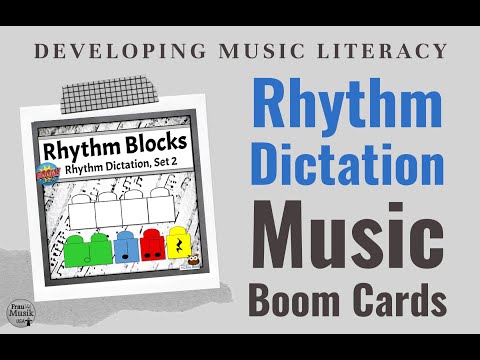
Drag and Drop Rhythmic Dictation Boom Cards
Click below to see the sequential bundle that includes 8 differentiated Boom Cards sets.
Click to See 8 Sequential Boom Cards Sets – Rhythmic Dictation
- Primer – Quarter note/rest, (FREE)
- Set 1A – Quarter note, eighth notes
- Set 1B – Quarter note/rest, eighth notes
- Set 2 – Quarter note/rest, eighth notes, half note
- Set 3 – Quarter note/rest, eighth notes, sixteenth notes
- Set 4 – Quarter note, eighth notes, sixteenth notes, eighth/2 sixteenth
- Set 5 – Quarter note, eighth notes, sixteenth notes, 2 sixteenth/eighth
- Set 6 – Quarter note/rest, eighth notes, syncopation
Save over 20% when you invest in these easy-to-use, sequential sets as a BUNDLE.
Melodic Dictation – 7 Sequential Sets
These Melodic Dictation Boom Cards follow the same format as the rhythmic sets, but focus on pitch instead of rhythm. Students listen to a short melody and drag the blocks to build what they hear. It’s a simple, effective way to strengthen listening skills and melodic reading.
The series includes seven sequential sets. Each level focuses on a specific pitch set so you can match the activity to your students’ readiness or differentiate within a class.
The quick video below shows exactly how the process works.
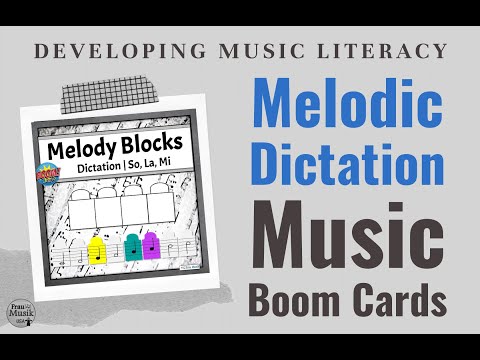
Click to preview the Melodic Dictation sets below
Browse the full bundle below to see the pitch sets available.
Click to See 7 Sequential Boom Cards Sets – Melodic Dictation
Melodic Dictation Key of C
- Melodic Dictation Set 1 – So, Mi (FREE)
- Melodic Dictation Set 2 – So, La, Mi
- Melodic Dictation Set 3 – Do, Re, Mi
- Melodic Dictation Set 4 – Do, Re, Mi + So
- Melodic Dictation Set 5 – Do, Mi, So
- Melodic Dictation Set 6 – Do, Mi, So + La
- Melodic Dictation Set 7 – Do, Re, Mi, So, La
Save over 20% when you invest in these NO-PREP sequential sets as a BUNDLE.
Or, browse our complete Music Literacy Boom Cards Library on Boom Learning.
Treble Clef and Bass Clef Note Name Series
These note-name Boom Cards follow a clear, scaffolded sequence that helps students build confidence and accuracy. Each set focuses on a limited number of notes before combining them, making it easier for students to read accurately.
- Sets 1-2: Basic line and space notes separately.
- Set 3: Basic line and space notes mixed.
- Sets 4-5: Extended line and space notes separately.
- Set 6: Extended line and space notes mixed.
The short video below shows how the decks work.
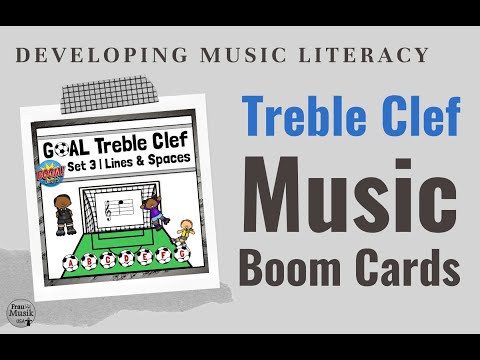
Easy-to-Use Treble Clef Complete Bundle
This soccer theme and the game-like atmosphere of Boom Cards help to engage reluctant students who might otherwise “tune out” during such music activities.
Browse the complete bundles for both clefs to see how the sequence builds from beginning to advanced levels.
Click to See 6 Sequential Boom Cards Sets – Treble Clef Note Names
- Set 1 – Treble Clef Spaces | BASIC (FREE)
- Set 2 – Treble Clef Lines | BASIC
- Set 3 – Treble Clef Lines & Spaces | BASIC
- Set 4 – Treble Clef Spaces | EXTENDED
- Set 5 – Treble Clef Lines | EXTENDED
- Set 6 – Treble Clef Lines & Spaces EXTENDED
Save over 20% when you invest in this easy-to-use COMPLETE BUNDLE.
No-Prep Bass Clef Bundle
These bass clef sets follow the same scaffolded sequence as the treble clef sets.
Click to See 6 Sequential Boom Cards Sets – Bass Clef Note Names
- Set 1 – Bass Clef Spaces | BASIC (FREE)
- Set 2 – Bass Clef Lines | BASIC
- Set 3 – Bass Clef Lines & Spaces | BASIC
- Set 4 – Bass Clef Spaces | EXTENDED
- Set 5 – Bass Clef Lines | EXTENDED
- Set 6 – Bass Clef Lines & Spaces | EXTENDED
Save over 20% when you invest in all 6 sequential sets in this BUNDLE.
Need Help Getting Started Using Boom Cards?
If you’d like more guidance on using Boom Cards in your music classroom, these posts walk you through common questions, setup tips, and creative lesson ideas:
Not finding what you need? Click to browse more sequential Music Literacy Boom Cards or send me a quick email through my Contact Form. I’m happy to help.
Snow Days, Virtual Days, Water Main Breaks, Oh My!
School schedules can change with almost no warning. Some districts turn snow days or weather cancellations into AMI (Alternative Methods of Instruction) virtual days. Others face sudden building issues (like a water main break) that call for quick adjustments.
Even though long-term online teaching is behind us, it’s still helpful to have a few digital lessons ready to go. These activities work well when you need something last-minute, and they’re just as useful in the regular classroom for reinforcement or independent work.
Conclusion – Supplement Your Lessons
It’s a gift to be teaching music face-to-face in our classrooms. Digital activities don’t replace hands-on music making, but they’re powerful supplements. They help reinforce music literacy skills, provide productive sub plans, and give students clear, structured practice they genuinely enjoy.
Whether you teach in a classroom, studio, or homeschool setting, these interactive resources can strengthen your lessons and make music reading more accessible for every student.
Best wishes!
Get My Free Newsletter
Looking for more practical ideas and ready-to-use activities for your elementary music classes? When you sign up, you’ll get 5 Free Boom Cards Sets delivered straight to your inbox. This includes one exclusive set for my email community.
I’d love to stay connected and share helpful resources with you. See you soon in your inbox. 😊
Related Post
Meet the Author

Terri Lloyd is a former K–5 music educator with more than 30 years of experience teaching elementary music.
Her credentials include:
- Bachelor of Music
- Master of Science in Education with an elementary music focus
- Missouri State Teaching Certificate, Vocal and Instrumental Music, Grades K-12
- Kodály Certification Levels I–III
- Instructional Technology Certificate in Curriculum and Design
Through Frau Musik USA, Terri helps elementary music teachers build students’ music literacy and performance skills with practical lessons and activities grounded in real classroom experience.
She develops music curriculum resources, presents music education workshops, works as a church musician, and K–5 Sunday school teacher. Terri also performs with a local big band, pit orchestras, and at community events.
2 Comments
Comments are closed.